Mediagraphy - Discography - Trackography - Videography - Gigography - Biography - Chronology

Showing posts with label With Aretha Franklin. Show all posts

20 November 2014

Ain't But The One (With Aretha Franklin)

Album3 (VHS): Duke Ellington - We Love You Madly, VRV 1124, S.l.s.a. (France).
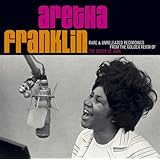
Album3: Rare & Unreleased Recordings From The Golden Reign Of The Queen Of Soul, Atlantic/Rhino B00122MKI0, 16 October 2007.


The churchy duet from the We Love You Madly tribute to Duke Ellington (1973) was also released on Aretha's Unreleased Recordings album, in an edited, remastered version.

The album version is 6:01, where the video version - including Ray's rather extensive spoken intro - is only 4:46. During the first minutes the album producers also added Hammond organ and keyboard sounds (and I think some percussion) to the track, numbing Ray's original piano playing to almost unhearable levels for the main part of the tune.
The result, however, is pleasing; the only odd thing is that the album producers didn't make explicit that they a) went back to the original, longer, taping, and b) didn't specify what they changed and added.

The details listed by Michel Ruppli's Atlantic Discography (sub Master #26222) are: "vo RC, AF, JC" (i.e. that Ray Charles, Aretha Franklin, and James Cleveland's gospel singers took care of the vocals).
David Ritz' liner notes to the album explain nothing, and erroneously state that Aretha played piano and Ray played electric piano, quite different from what can be seen in the video. The other musicians credited by Ritz are Dave Grusin (keyboards), Kenny Burrell (guitar), Chuck Rainey (bass) and Paul Humphrey (drums). They no doubt contributed to the original show, but I very much doubt if Gruisin played keyboards in the original, videotaped version of Ain't But The One.*

I suspect that in an interview (cf. 1, 2) Jerry Wexler, who (executive) produced the album, may have been about to tell something about 'post producing' this particular track when the interviewer diverted him into replicating a well known, similar, anecdote about the 1971 release of Aretha & Ray's famous duet on Spirit In The Dark. My conjecture, therefore, is that it was Wexler who may be 'blamed' for also 'improving' this release of Ain't But The One.

From Unreleased Recordings:

16 October 2014

Spirit In The Dark (With Aretha Franklin)

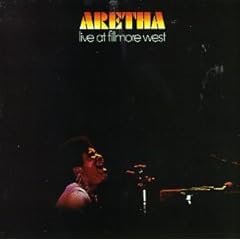
Album3: Aretha Franklin, Live At The Fillmore West (Atlantic, SD 7205).
Album 3: Don't Fight The Feeling: The Complete Aretha Franklin & King Curtis Live At Fillmore West, Rhino Handmade, 3 May 2005.
Audio stream: Aretha Franklin - Fillmore West, Concert Vault, S.a.
Video stream: Aretha Franklin, Spirit In The Dark, Concert Vault, S.a.

Line-up: King Curtis’s the Kingpins - with Jerry Jemmott on bass, Bernard Purdie on drums, Cornell Dupree on guitar, Truman Thomas on electric piano, Pancho Morales on congas, plus the Memphis Horns, backing vocals by The Sweethearts Of Soul (Brenda Bryant, Margaret Branch, Pat Smith). Special guest Billy Preston backed Aretha (and Ray!) on organ. (The horn parts and some of the backing vocals by the Sweethearts Of Soul were dubbed over in the studio).

Also read earlier posts here.

Original album cut:


Wexler's re-cut:


In-house video:

14 October 2014

Takes Two To Tango

Album: Ray Charles And Betty Carter, ABC/Paramount 385, July 1961.

Recorded at the United Studios in Hollywood on June 13-14, 1961.

Ray Charles - piano, voc.; Betty Carter - voc; Hank Crawford - alto saxophone; David Fathead Newman - tenor saxophone; Leroy Cooper - baritone saxophone; Bill Pittman - guitar; Edgar Willis - bass; Mel Lewis, Bruno Carr - drums; The Jack Halloran Singers - background vocals; strings. Marty Paich - arranger; conductor.


Live:
'73 TV Midnight - With Aretha Franklin

11 October 2014

Things Go Better With Coca Cola (Jingles; Also With Aretha Franklin)

With Leroy Cooper.
Between 1965 and 1968 Ray Charles made an interesting series of style variations on Coke's campaign theme "Things Go Better With Coca Cola". Each commercial was produced as luscious as a new album track. He used the best talent that Ray Charles Enterprises had to offer, and used the facilities of RPM International in Los Angeles to record it all. The arrangements were done by Sid Feller and Rene Hall. Hall conducted the Ray Charles band, Feller took care of the strings. Ray also invited The Raelettes. (Read my full story here).

One of the commercials - "When I Come Home To You In The Evening" (55 seconds, from '65 or '66) was released as a hidden track on Genius & Soul: The 50th Anniversary Collection (16 September 1997; Rhino/WEA, ASIN: B00000343O), right after America The Beautiful, on the 4th disk.
Over the years, commercials from the campaign were (re-)released on 45 RPMs, and on several albums. In 1996 and 1998 Ray's and Aretha's radio commercials were part of a series of 2 compilation CDs on the Vox label (UK):


For the 1967 campaign the writers "selected by Coca Cola were Roger Cook and Roger Greenway, from England, Neil Diamond and Rosemary McCoy," the Los Angeles Sentinel reported (Diamond may have written the Ray + Aretha commercials).
There may well have been even more (and earlier!) versions of Ray's solo radio commercials. The time line below isn't certain, but to me it seems to be the most logical chronology (cf. this article by a Coke advertising-historian).

The regular durations of the commercials probably were (15" and?) 30" and 90", but in '67 Coca Cola also released a compilation with 90 second-edits:

"What A Day..." (1:30):


"I'm So Tired (It's Been A Long Journey" (1:30):


"When I Come Home To You In The Evening" - 55 seconds, from '65 or '66 (ignore picture;-):

"I'm So Tired (It's Been A Long Journey)" - 60 seconds:

"When You Find Your Worried Mind Is Easin'" (with Aretha Franklin) - 90 seconds:

"You Bring On The Good Times Darling (with Aretha Franklin)" - to my regret I can only present this one in an unfunny lipsync spoof:


In 1968 Coca Cola also produced a glamorous TV commercial with Charles, shot in and around his airplane. The sound track uses the Roger Cook & Roger Greenaway song In between The Heartaches And The Crying, written specially for Ray Charles. Listen to the track in the second clip, below.


In 1970 Cook and Greenaway were awarded for the 'Radio Jingle Of The Year' in the States (which may imply that the TV commercial was also from 1969).
"In Between The Heartaches And The Crying" - 90 seconds:

19 May 2012

A Great Day In San Francisco - Ray & Rea @ The Fillmore West, Unabridged (1971)

King Curtis, Aretha, Ray, Billy.
This video - in my perception truly the Holy Grail in the History of Soul Music - suddenly popped up in my inbox yesterday. This morning I was informed* that, since a few months, it can also be watched online. (I keep on wondering how some uploads, although they are properly titled, can be so hard to track down on Youtube).
It's the unabridged in-house video of Ray's surprise guest appearance at Aretha Franklin's concert at the Fillmore West, on March 7, 1971 (the only footage missing from this copy is the last 3 feet of Ray's walk-off at the end; there's also a split second black out at 15:20, probably because of a tape change).
The 2005 4-CD re-release.
I wrote earlier articles about the live album, the discovery of the unabridged audio recording, and the discovery of the second part of this same video.

For me the biggest surprise while watching the (first part of the) video footage that's new to me, is in the fact that The Genius delivered it standing up, holding a microphone - I don't know of any other instance at a live concert where he did that, before or after '71.

Photo by Jim Marshall.
In a 1971 interview Ray declared, "That live recording by Aretha Franklin that I joined in on recently? It was a true accident. I just happened to be in a club in San Francisco, and somebody said to me: 'Hey, Ray, Aretha's working at Basin Street West' or wherever it was, and I said: 'I didn't know that. So why don't we go by and catch her?' So we all went by, and I was sitting out there. Evidently somebody told her, and before I knew it she'd left the stage and come up and snatched me. I mean, I can't argue with a woman - it's very difficult for me! She said: 'Come on up and do something'. but I didn't know what to do. I'm sure, if you listen to the song we did, the Spirit In The Dark, you could tell I don't even know the thing. I'd heard her sing it, but I think when Aretha sings something, after that everybody else should forget about it. You know nothing else can be done to it. So I didn't know it, but I figured: okay, since I'm here we might as well fake it the best we can. And the thing wound up selling over a million records."

Personnel:
King Curtis (ts, band leader) and The Kingpins (Bernard Purdie - d; Cornell Dupree -g; Jerry Jemmott - b; Truman Thomas - ep [he stepped back when Ray came on stage]; Pancho Morales - congas; the Memphis Horns (Wayne Jackson, Roger Hobbs - tp; Jack Hale - tb; Lou Collins, Andrew Love - ts; Jimmy Mitchell - bs), The Sweethearts Of Soul (Brenda Bryant, Margaret Branch, Pat Smith) - backing vocals; special guest Billy Preston - Hammond organ.


Some things more about the recording (circumstances) from Mitch Meyers' liner notes:
"How do you top that? Trust Aretha to receive some divine intervention on the road to pop's promised land. 'I discovered Ray Charles!' she exclaims. In a spontaneous moment, Aretha brought gospel-soul icon Ray Charles onstage for a reprise of Spirit In The Dark. Their ecstatic duet is surely a moment to remember but according to Jerry Wexler, the two golden voices were surrounded by chaos when they came together on the bandstand. 'Yeah, that was an accident,' Wexler remembers. 'Nobody knew Ray Charles was there and when he came out onstage it was one big ball of confusion. They started to vamp on the Spirit In The Dark and couldn't get it together. Finally it had a semblance of agreement, but it was an unplanned mess and we had to do some very careful editing.'
Ray, Aretha.
Billy, Aretha, Ray.
Brother Ray's singing and electric piano playing lends something extra to the live record, but his special appearance barely made it onto the finished product. 'Because Ray remembered the difficulties [onstage] I had a very difficult job getting his okay to release the record with his voice on it," says Wexler. 'It took a lot of persuasion and argument, and Ray Charles is not amenable to persuasion once he makes up his mind. So that was a difficult part.' [...]
Jerry Wexler felt there was one more noteworthy thing regarding the making of this record: [...] 'In live gigs, the horns and the background voices almost always sound out of tune, but they're not. That's because certain voices in the group and certain voices in the horns are too prominent and you can't change it on a live broadcast. So we redid the horns and the voices in the studio using the same people. That what's important, all they did was replicate their parts. We laid it over and it came out perfectly, there were no intonation problems but the trick was to use the Memphis Horns and the Sweethearts of Soul. So we called them back in, that's why it came out as good as it did.'"
Here's the integral concert:


* A special thank you to Hector TarĂ­n.

30 April 2011

Video Of Legendary Spirit In The Dark Duet (1971, With Aretha)!

Wolfgang's Vault, those wonderful guys who, since a few years, regularly give us supposedly long-lost audio recordings of live concerts, last year pleasantly surprised Rea & Ray-lovers with the unabridged 25m05s audio version of Spirit In The Dark, formerly only known through Jerry Wexler's cut for the Atlantic album Aretha Franklin, Live At The Fillmore West.
They recently unleashed an even bigger surprise: a crude 9m22s video that was recorded of the same concert over the Fillmore West's in-house tv-system. The release is part of a new program where Wolfgang's Vault will digitize and publish hundreds of hours of historical concert video tapings.

ThisThe integral version of this wonderfully primitive video can be watched here.

Every fan can no doubt live with the very limited quality of the video and the audio. The discrepancy between the concert as I have always visualized it in my mind and these actual pictures is huge. The stage is even smaller, and much more cramped, than I thought, and the response of the audience seems to have been much more laid back than Wexler's edit suggested. But that's just a reality check.
A bit harder to swallow is that the footage does not include the golden moments where Aretha interrupted her own rendition of Spirit to bring Ray on stage, happily shouting "I discovered Ray Charles".
Since those were the moments that always raised my neck hair and always gave me goosebumps when I listened to the original album version. Those were the moments that became part of my life's sound track.
By the way, I'm not sure if this footage actually is completely lost. As I wrote in an early post, the BBC archive's description of the Omnibus documentary Aretha Franklin - Queen Of Soul (1987)  promises 168 seconds where we see how "Aretha brings Ray Charles onto stage & they sing Spirit in the Dark". And I still have a few more trails to follow to other footage.

Update 18 May 2012:
A friend send me a complete 25-minute copy of the in-house video with Ray's contribution to the show, entirely congruent with the unabridged audio copy mentioned above.
This is what really happened: after performing Spirit In The Dark as her solo concert's finale, Aretha leaves the stage (at 5:05), obviously preparing to come back for an encore. When she returns (at 6:15), Ray is at her side. After bringing him to center stage, she sits down behind the electric piano, and leaves Ray standing beside her to do his thing (from 7:20). Ray then delivers his first eight minutes standing up (only time I have ever seen him doing that in a live concert!). 15 minutes into the tape, Ray takes over the piano - and this is where the Wolgang's Vault video (linked above) starts.

Update 19 May 2012:
The unabridged video (the only omission is Ray's walk-off) is also on Youtube!

03 August 2010

Ray & Ree On The All-Star Gong Show Special (1977)

The Gong Show was an outrageous parody of television talent shows. Each show presented a contest between amateur performers of often dubious talent, with a panel of three celebrity judges. It broadcast on NBC's daytime schedule from June 1976 through July 1978, and in first-run syndication from 1976-1980 and 1988-1989. The NBC version and the 1977-1980 syndicated seasons were directed by John Dorsey and emceed by Chuck Barris, who also produced them. Read this for an extensive and interesting description of the format and its history.
On 26 April 1977, NBC gave this daytime hit a one-time-only shot in primetime, titled The All-Star Gong Show Special. The panelists were Jamie Farr, Arte Johnson, and Jaye P. Morgan. Ray Charles ("living legend in his own time") and Aretha Franklin ("great singer") (together, in a duet?) performed as "singers".endorsed the show in funny testimonials:

The rest of this show (parts 2 to 8) is also on Youtube, if you want to get an idea of what could happen on this show. To top it off, also watch the, infamous, Popsicle-clip below. And for a background on this incident, watch this video (quote: "If two twins can't fellate popsicles during a game show, what point is there in living in a democracy?").

17 July 2010

Ray Charles In The Blues Brothers (1980)

Ray Charles was one of the soul & blues singers starring in the music comedy The Blues Brothers, a film directed by John Landis (original story written by Dan Aykroyd), and released by Universal Pictures on 16 June 1980.

The tag line was "They'll never get caught. They're on a mission from God." Jake (Belushi) and Elwood (Aykroyd) are the former front men of a broken down blues band which disbanded after Jake was arrested several years before. Upon his release, he discovers that his boyhood orphanage home is about to be foreclosed upon for non-payment of property taxes. Beaten up by a nun, sung to by James Brown, and touched by God, Jake sees the light and seeks to put the band together for one last show - a charity benefit to save the orphanage.
Their journey takes them from James Brown to Aretha Franklin to Ray Charles to John Lee Hooker to Cab Calloway.

In Scene 20 Ray plays Ray, the owner of Ray's Music Exchange, a pawn shop in Calumet City (cf. this).
Jake, Elwood, and the Blues Brothers Band visit the shop to buy some new equipment. The characters in this scene are 'Joliet' Jake Blues, Elwood Blues, Ray, 'Duck' Dunn, Alan 'Mr Fabulous' Rubin, Lou 'Blue Lou' Marini, Matt 'Guitar' Murphy, Murphy 'Murph' Dunne, Steve 'The Colonel' Cropper, Tom 'Bones' Malone, Willie 'Too Big' Hall, and the Young Guitar Thief.
I assume the song was recorded in the sound studio (see B&W photos below), and therefore that Ray and 'the band' playbacked the song. (On Tail Feather you can also hear a bari player, while there was none on the film set).
The scene was filmed at Universal Studios Soundstages and Shelley's Loan Co (at 300 E. 47th, Chicago IL;  coordinates: 41.80929852285026, -87.61956233877473. The dancers weren't hired - they just got off the train and started to boogie. The scene cost $600,000 to produce.
Clipping from Billboard, 13 September 1980.

Ray: Pardon me, but we have a strict policy concerning the handling of the instruments. An employee of Ray's Music Exchange must be present. Now, may I help you?
Murph: Tell me a little about this electric piano, Ray.
Ray: Ah, you have a good eye, my man. That's the best in the city Chicago.
Jake: How much?
Ray: 2,000 bucks and it's yours. You can take it home with you. As a matter of fact, I'll throw in the black keys for free.
Jake: $2,000 for this chunk of shit? C'mon, Ray.
Murph: I mean really, Ray, it's used. There's no action left in this piano.
Ray: E-excuse me, uh, I don't think there's anything wrong with the action on this piano [launches into Shake A Tail Feather].

Ray's original text in the shooting sequence: Breaks my heart to see a boy that young goin' bad. Footage here.

At the closing of the film, as each character is credited, Ray, accompanied by the Blues Brothers Band, contributes a line to Jailhouse Rock: "Let's rock, everybody, let's rock" (just as James Brown, Cab Calloway, and Aretha Franklin):


See the 1980 Chronology page for more photos and stills. Read this for backgrounds.

The Blues Brothers' soundtrack album was released by Atlantic (SD 16017, June 20, 1980). A few tunes, including Tail Feather were also released as singles. Atlantic also released Tailfeather as a single (K 11615; backed with Cab Calloway's Minnie The Moocher).

Shake A Tail Feather:


The song was originally recorded in 1963 by The Five Du-Tones:

But the arrangement in the film was based on this version by James and Bobby Purify:

Scenario reconstruction (inc. spelling errors).

For the Billboard #1 live album Briefcase Full Of Blues (Atlantic, 1978) that preceded the film see this.

30 June 2010

Spirit In The Dark, Unabridged (With Aretha Franklin) (1971)


The original album release contained an extremely edited version of the tune. Jerry Wexler cut the 25 something minutes back to just a few, and added horns and backing vocals. But here is the full 'raw' version.

You can watch the integral (in house) video of the event below.

The album was taped at the Fillmore West in San Francisco, on March 5, 6 and 7, 1971. Ray appeared on the last night.

Line-up: King Curtis’s the Kingpins - with Jerry Jemmott on bass, Bernard Purdie on drums, Cornell Dupree on guitar, Truman Thomas on electric piano, Pancho Morales on congas, plus the Memphis Horns, backing vocals by The Sweethearts Of Soul (Brenda Bryant, Margaret Branch, Pat Smith). Special guest Billy Preston backed Aretha (and Ray!) on organ. (The horn parts and some of the backing vocals by the Sweethearts Of Soul were dubbed over in the studio).

Original release: Aretha Franklin, Live At The Fillmore West (Atlantic, SD 7205). The elpee had a 5-week #1 run on the Billboard R&B album chart.
Contents from the three concerts were re-released several times, in several formats. The most memorable one is Rhino Handmade's 4-CD set, titled Don't Fight The Feeling: The Complete Aretha Franklin & King Curtis Live At Fillmore West (May 3, 2005; ASIN: B0006SSOH2).

And don't forget to read this excellent, thoughtful piece by Jeff Meshel.

Soundclip (original album cut):


The video
Wolfgang's Vault* has the full unabridged version of Ray's guest performance, one of the Greatest Moments in pop history. Watch Ray stepping on stage to act out a smoking improv on Spirit In The Dark.

* More recently, WV has also published audio-only versions of Aretha's concerts.


Wexler's cut (soundclip):


The B/W footage comes from a "Fillmore in house video". On 12 June 1987 the BBC aired a new episode of the Omnibus series, Aretha Franklin - Queen Of Soul. From 42:57 to 45:45 the documentary had a few bits from this footage."Aretha brings Ray Charles onto stage & they sing Spirit in the Dark". Source here.

In a 1971 interview Ray declared,
"That live recording by Aretha Franklin that I joined in on recently? It was a true accident. I just happened to be in a club in San Francisco, and somebody said to me: 'Hey, Ray, Aretha's working at Basin Street West' or wherever it was, and I said: 'I didn't know that. So why don't we go by and catch her?' So we all went by, and I was sitting out there. Evidently somebody told her, and before I knew it she'd left the stage and come up and snatched me. I mean, I can't argue with a woman - it's very difficult for me! She said: 'Come on up and do something'. but I didn't know what to do. I'm sure, if you listen to the song we did, the Spirit In The Dark, you could tell I don't even know the thing. I'd heard her sing it, but I think when Aretha sings something, after that everybody else should forget about it. You know nothing else can be done to it. So I didn't know it, but I figured: okay, since I'm here we might as well fake it the best we can. And the thing wound up selling over a million records."

The second photo has also been associated with the Winterland Ballroom gig in February '71, and has been attributed to Robert Altman.
Photos by Jim Marshall.


20 May 2010

Ray Charles Ft. In Coca Cola Commercials (Also With Aretha Franklin) (1965, 1967, 1968)

This PR piece was published in the Carolina Times
on February 8, 1969.
In 1965 Ray recorded a series of radio commercials for Coke. They were part of the McCann Ericsson campaign "Things Go Better With Coke", to which a whole slew of other soul singers also contributed. Ray's version received the Golden Spike Award as the best radio commercial in 1965 (Ray's rehab year!).
In November 1968 Ray recorded and sang a new set of commercials with Aretha Franklin (a duet and two  individually performed versions by both artists). The session was produced by Billy Davis. The arrangements were done by Sid Feller and Rene Hall. Hall conducted the Ray Charles band, Feller took care of the strings. Ray and Aretha used their own backing vocals groups.
"Many pieces of material were rejected before the four sets of lyrics and melodies were chosen. The writers finally selected were Roger Cook and Roger Greenway, from England, Neil Diamond and Rosemary McCoy," the Los Angeles Sentinel reported (Diamond may have written the Ray + Aretha commercials).
There may well have been more versions of Ray's solo radio commercials. The time line below isn't certain, but to me it seems to be the most logical chronology.

"What A Day...", and  2x "I'm So Tired (It's Been A Long Journey)" - in the context of a contemporary Bill Cosby radio show, aired in February and March, 1968:


"When I Come Home To You In The Evening" - 55 seconds, from '65 or '66 (ignore picture;-) - this jingle was also released as a hidden track on Genius & Soul: The 50th Anniversary Collection (16 September 1997; Rhino/WEA, ASIN: B00000343O), right after America The Beautiful, on the 4th disk.

"I'm So Tired (It's Been A Long Journey)" - 60 seconds:

"When You Find Your Worried Mind Is Easin'" (with Aretha Franklin) - 90 seconds:

"You Bring On The Good Times Darling (with Aretha Franklin)" - to my regret I can only present this one in an unfunny lipsynch spoof:

"I'll Be Walkin' Up And Down" (Aretha's solo radio commercial) - 60 seconds, from 1966 or '67:


In 1968 Coca Cola also produced a glamorous TV commercial with Charles, shot in and around his airplane. The sound track uses the Roger Cook & Roger Greenaway song In between The Heartaches And The Crying, written specially for Ray Charles. Listen to the track in the second clip, below.

In 1970 Cook and Greenaway were awarded for the 'Radio Jingle Of The Year' in the States (which may imply that the TV commercial was also from 1969).
"In Between The Heartaches And The Crying" - 90 seconds:

Excellent studio set photos (allegedly shot by Joe Adams during the recording of radio commercials) can be found here. They were used in a Coke print campaign (full color and black/white), including advertorials as in Ebony, October 1967:
Contemporary promo single:

Over the years, commercials from the campaign were (re-)released on several albums. In 1996 and 1998 Ray's and Aretha's radio commercials (a/o longer studio versions of their jingles?) were part of a series of 2 compilation CDs on the Vox label (UK):   
   
Here is another compilation.

14 April 2010

Ray Charles On Duke Ellington... We Love You Madly (1973)


Ad in Billboard.

Photos taken during  rehearsals for the show(or was this taken 
at a rehearsal for the 1971 episode of the Merv Griffin Show?).
Duke Ellington... We Love You Madly was a tribute to Duke Ellington, recorded at the Shubert Theatre in Los Angeles, on 10 and 11 January 1973 in an ABC special (aired on February 11th). Ray performed I Like The Sunrise, and he did a breathtaking duet on Ain't But The One with Aretha. Both were also part of the chorus line in the opening act, where the whole cast united in It Don't Mean A Thing (If It Ain't Got That Swing), and Ray did a quatre mains with Count Basie.

 Exterior of a theatre advertising a screening of  the TV Special.
Photo by Ted Williams.
Personnel:
Cat Anderson, Bill Berry, Ernie Royal, Clark Terry, Cootie Williams, Snooky Young (tp); Bob Brookmeyer, Jimmy Cleveland, Tyree Glenn, Maurice Spears, Britt Woodman (tb); Vince DeRosa, Art Maebe, Dick Perissi (frh); Red Callender (tu); Harry Carney,

The producers and Atlantic played with the
idea to release an album (from
Cashbox,
May 26, 1973). At the time they did'nt execute on
the idea, but the later "rare" Aretha track
discussed below was clearly made possible
because of this abandoned plan.
Harry Carney, Paul Gonsalves, Bill Green, Murray McEachern, Bill Perkins, Russell Procope, Jerome Richardson, Marshall Royal, Murray McEachern, Paul Gonsalves, Bill Perkins, Bill Green, Harry Carney (reeds); Count Basie (p); Dave Grusin (kb); Kenny Burrell (g); Ray Brown (b); Chuck Rainey (el-b); Louis Bellson, Paul Humphrey (d). Luther Henderson, Jimmy Jones, Phil Moore (arr); Quincy Jones (arr, cond); 4 violins, 12 violas, 4 violin cellos, 1 harp.

Performers:
Ray Charles, Cornerstone Baptist Church Choir, Sammy Davis Jr., Billy Eckstine; Duke Ellington; Marva Cally, Roberta Flack, Aretha Franklin, Peggy Lee, Sarah Vaughan, Joe Williams.

Cover of French VHS release.
Produced by Norman Lear and (exec) Quincy Jones, directed by Bud Yorkin. Phil Ramone was responsible for the sound mix.

Later Ray remembered, "[Ellington] was on an oxygen tank until they called him to come out onstage. But he went out there and you'd never have known there was anything wrong with the man. That's what music can do."

Read review here. Behind the scenes-photos are here. The show was released by RCA on VHS, in France (VRV 1124)*.

Quincy looking back:


It Don't Mean A Thing (If It Ain't Got That Swing) (with Roberta, Sarah, Peggy, Count, Sammy, Billy, Quincy, Joe and Marva):


Ain't But The One (with Aretha) - this song was also released (in an altered version) on: Aretha Franklin, Rare & Unreleased Recordings From The Golden Reign Of The Queen Of Soul (Atlantic B00122MKI0):

   [Clip removed from YouTube]

*Remarks made by JoĂ«l Dufour. 

09 April 2010

Ray Charles Co-Hosting The Midnight Special (1973, 1976, 1977, 1978, ?1979)

The Midnight Special was a Friday night Pop Rock variety show on NBC TV that ran for 9 years (1972 - 1981).  It was taped in front of a live studio audience at NBC Burbank, directed by Stan Harros. Concert footage was included at times. Wolfman Jack appeared each week as announcer and main host, each week also with a different guest host. Ray contributed at least 5 times.

30 March 1973
In season 1 Ray Charles hosted the 10th episode, on 30 March 1973. His guests were Bill Cosby, Carol Burnett, Aretha Franklin, Freeman King, and Murray Langston. Ray brought his own band and The Raelettes.


The show went like this:
Burnett and Charles.
  • Ray Charles sings Eleanor Rigby, Georgia On My Mind, What'd I Say (with Raelettes).
  • Ray Charles and the Raelettes sing I Can Make It Through The Days (But Oh Those Lonely Nights).
  • Bill Cosby talks with Ray Charles and dances while Charles sings Every Saturday Night.
  • Carol Burnett talks with Ray.
  • Aretha Franklin sings A Brand New Me.
  • Aretha Franklin & Ray Charles sing Takes Two To Tango.
  • The Raelettes sing Shake (Charles on piano). 
  • The Earl Scruggs Revue sings T For Texas & and Everybody Wants To Go To Heaven.
  • Freeman and Murray reenact the boxing scene from Great White Hope in slow motion. 
Compilation with Georgia, Tea For Two and What'd I Say:


  • Contract for the appearance of The Raelettes (Dorothy Berry, Mabel John, Susaye Greene, Vernita Moss, Estella Yarbrough) in this show.


 '73 TV Midnight-1 - Takes Two To Tango (with Aretha Franklin):


13 April 1973
The Raelettes: Vernita Moss, Dorothy Berry, Mabel John, Susaye Greene, Estella Yarbrough.


Photos (all dated on March 10...): NBC / Getty Images.
Ray was a guest in episode 12, hosted by Bill Cosby, that aired on Friday 13 April 1973, with a duet (Cosby only in a speaking role) on Early In The Morning, with Billy Preston on organ (Cosby always made Ray do "Atlantic" songs). The other guests were Steely Dan, Waylon Jennings, Taj Mahal and Fanny.


31 January 1975
Ray was back on together with Aretha on 31 January 1975 (other guests: The Byrds). Source: Paley Center Archive, ID: B:62694. In an announcement of this show, in Jet magazine (Feb. 6, 1975) specified that Ree and Ray would "join in a song during Jan. 31 celebration of second anniversary of The Midnight Special", as a caption to a still of their Tango rendition. This may suggest that just this performance was aired again in this episode.
Update: they indeed just re-broadcast the Tango song as it was taped on January 30.

30 April 1976
Ray also hosted episode 28 in season 4, on Friday 30 April 1976. He brought his Orchestra. No doubt the highlight was a version of What'd I Say with Sara Vaughan. The setlist was:
  • Every Saturday Night
  • Georgia On My Mind
  • Living For The City
  • Blues For Big Scotia
  • America The Beautiful
  • What'd I Say (with Sarah Vaughan)
Could this photo be from this show?
The contents of the remainder of the show are described here. In the second clip Ray introduces the ventriloquist duo Aaron and Freddie, who opened for Ray at many concerts, from the early 1970s well into the 1990s. The person who submitted the footage erroneously attributed the year 1978 (and episode #23) to it.

Personnel:
Bob Coassin, Johnny Coles, Luis Gasca, Jeff Conrad Jack Evans - trumpets; Ken Tussing, Henry Coker, Wally Huff - trombones; Bob Knedlik - bass trombone; Ed Pratt, Clifford Solomon - alto saxophones; Andy Ennis, James Clay - tenor saxophones, Bill Byrne - bariton saxophone; Scott von Ravensberg - drums; Tony Matthews - guitar; Jim Campbell - bass; Ernest Vantrease - keyboards.

Midnight Special, 1976 - Georgia On My Mind:

Midnight Special, 1976 - Aaron & Freddie:


23 July 1977
This clipping from Jet, 28 July 1977, shows that Ray contributed to yet another Special with Aretha, B.B. and Gladys, on 23 July 1977 (or did they re-use again the '73 Tango footage, as also happened in the 1975 show described above?):
A 9-DVD collectors' set (Guthy Renker, 2006) is offered here (it's unclear to me which of Ray's other performances, except Tango and Georgia, are on it - if at all). Watch the excellent DVD Promo here. Elsewhere on the web sometimes a (illegit?) 20-DVD box is promoted.

1979?
The title of this photo, when it was put up for sale on Ebay, was "1979: Musician Ray Charles performing on the television series, 'Midnight Special'."