Mediagraphy - Discography - Trackography - Videography - Gigography - Biography - Chronology

Showing posts with label With Quincy Jones. Show all posts

07 March 2018

A Peggy Lee & Ray Charles Time Capsule From 1961


1. Intro; 2. I Got A (Wo)Man; 3. You Won't Let Me Go; 4. Just For A Thrill; 5. Yes, Indeed.

Peggy Lee was a huge fan of Ray Charles, who called her "Sister Peggy". She studio-recorded some of his tunes as early as 1959. A few years later she embedded an extensive Tribute To Ray Charles in her club show. At least two* of these shows, at the Basin Street East club in February 1961, were live-recorded: the February 9 "supper show" Basin Street East Proudly Presents Miss Peggy Lee Recorded At The Fabulous New York Club (Capitol T1520, 1961), and the February 8 "dinner show" Peggy At Basin Street East (Collectors' Choice CCM 2942, 2002).

Ray at that time was living in New York for a part of the year, and was a participant in Peggy's late night party entourage - probably thanks to Quincy "Brother Gump" Jones. Q wrote some charts for her, conducted her band when she returned to the Basin Street East in November 1961, and had a wild love affair with her.

Not too long before this second stint at the club, the three of them were part of a dinner event at the Backstreet Restaurant. One of the participants was a Dr. Robert Walters. For some reason, all guests were asked to sign the menu for him. This menu was auctioned in early March, 2018.
RR Auction House decribed the "Ray Charles" doodle (below) as a genuine signature, but that's a highly questionable authentication. Everybody who knew the Genius, also knew that he never signed anything. Nevertheless, seven or eight similar "signatures" from the years 1961 - 1964 have popped up over the past years.** My best guess is that this pseudo signature was routinely jotted down by Ray's personal assistant (or "valet" as he was often called), Duke Wade.
The "Mrs" added to the name may have been another result of Wade's discreet fantasy. It's much more feasible that the lady was Ray's current NYC girlfriend (or just one of them).


Peggy Lee writes, "Happy Birthday, with deep love always, Doctor Darlin," and  Quincy Jones adds, "To my wonderful district attorney — may all your days be as beautiful as you are." 

Program for the "Gala Premiere Dinner of Peggy Lee" at the Basin Street East nightclub on October 30, 1961.
It lists Quincy Jones as musical director.
Basin Street East photo holder: Jones posing with four people at the dinner event, one of whom was the recipient of the Back Street menu above, Dr. Robert Walter.

These memories, from Phoebe Jacobs, Peggy's closest friend, may glue all the information above together.
From: Peter Richmond,
Fever: The Life and Music of Miss Peggy Lee (New York, Picador, 2007).

* The February 9 dinner show remains unissued. **For some fascinating discussions. see the Autograph Magazine forum.

18 November 2014

Baby Cakes (Ray Charles On Organ)

Ray's liner notes.
Album 3: Quincy Jones, Quincy's Got A Brand New Bag, Mercury SR 61063, February 1966.

Recorded at Ray's RPM studios in Los Angeles, on 24 November 1965. Ray played the organ.

Bobby Bryant (tp), Urbie Green (tb), Kenny Shroyer (btb), Jackie Kelso (as), Plas Johnson (ts), Jewel Grant (bars), Ray Charles (org), Mike Rubini (p), Rene Hall, Arthur Wright (g), Carol Kaye (b), Grady Tate (ds), Gary Coleman (perc). Quincy Jones (arr, cond).

05 November 2014

I'll Be Good To You (With Chaka Khan, Quincy Jones)

Single3 (A, part 1; B, part 2): Qwest 22697, October 1989.
Single3 (12" Maxi CD): Quest 0-21408, 1989.
Music clip: see this.
Album3 (LP, CD): Quincy Jones, Back On The Block, Quest 26020, 1989.

Lead vocals – Chaka Khan, Ray Charles; guitar - George Johnson; bass - Louis Johnson; keyboards - David Paich, Greg Phillinganes, Ian Prince; drums - Harvey Mason; drum sounds - Bruce Swedien; backing vocals - George Johnson, James Ingram, James Gilstrap, Louis Johnson, Phil Perry, Siedah Garrett, Syreeta Wright; programmed by - Ian Underwood, Larry Williams, Michael Boddicker, Steve Porcaro; arranged by - Quincy Jones.

The clip:


I've counted up to 8 remixes floating around, but th Maxi CD mentioned above had 5. The 4-minute videoclip of the song was based on the album release, but the single that made it for the charts actually was a compilation of the longer remixes:

  • 12" Remix (8:06)
  • 12" Remix Dub
  • Good For Your Soul Mix (8:18): additional production and remix by Arthur Baker for ABI. Rap written and performed by Skam. Programming by Mac Quayle. Mix engineer: Mark Plati at Shakedown Sound. Edits By Charlie Barbie and Vic.
  • Good For Your Soul Dub (4:45)
  • Around The House Mix: details as Soul mix, plus: edits by Oh Oh Omar Santana.
  • Around The House Dub

The 33 1/3 vinyl version reproduced in the soundclip below specifies 3 of the mixes in yet another order:
  • 12" Remix 8:06
  • Good For Your Soul Mix 8:18
  • Good For Your Soul Dub 4:45


The label of this promo CD tells that there was also a 4:17 mix of the single version, plus an instrumental version with the same duration:

03 November 2014

It Don't Mean A Thing (If It Ain't Got That Swing) (With Cast)

Album3 (VHS, France): Duke Ellington - We Love You Madly, VRV 1124, S.a.

Opening of the 1973 CBS TV special Duke Ellington... We Love You Madly, recorded at the Shubert Theatre in Los Angeles, on 10 and 11 January 1973. With Roberta Flack, Sarah Vaughan, Peggy Lee, Count Basie, Ray Charles, Sammy Davis Jr., Billy Eckstine, Quincy Jones, Joe Williams, Marva Cally.

31 October 2014

Let The Good Times Roll (With Bono, Stevie Wonder, Quincy Jones)

Album3: Quincy Jones, Q's Jook Joint, Quest/Warner/WEA 9362-45875-2, November 1995.

Q's Jook Joint was Quincy Jones' fourth concept album in a quartet (with Body Heat, The Dude and Back On The Block).
The concept is based on the juke joints that served as makeshift nightclubs in the South. Quincy establishes his own juke joint in track 1, with Ray's Let The Good Times Roll (Bono and Stevie supporting).
In 1959 Quincy had penned the chart for the first studio recording (for the album The Genius Of Ray Charles, 1960). Q's Jook Joint also has a 0'56" track: Let The Good Times Roll (Reprise), with Quincy and Funkmaster Flex. Ray also contributed to this album's version of Stuff Like That.

22 October 2014

Poor Butterfly (With Quincy Jones A.O.)

Album3 (VHS): Quincy Jones - A Celebration In Seattle, VC II VC133, S.a. (c. 1983) or Front Row Video, 15 November 1990.

During this TV concert, taped on 12 or 13 March 1983 in Seattle, as an extra surprise, Quincy brought Bumps Blackwell, Floyd Standifer, Buddy Catlett, Major Pickford and Ernestine Anderson on stage, presenting them, together with Ray, as a reunion of a typical show at the Washington Social Club "in 1947 or 1948" [this should be 1948 or 1949, BS], where they made some extra money through the 'Kitty Box', where guests would put in an extra quarter for any request that was fulfilled by the musicians. The reunited group, together with Quincy and Ray, performed Poor Butterfly.

10 October 2010

Black Requiem - The Quincy Jones / Ray Charles Masterpiece That Never Was Released (1971, 1988, 1992) (Cont'd)


On 20 July 1976 Quincy Jones published a column in The Baltimore Afro-American, where he shed some more light on the genesis of Black Requiem (read earlier article here), revealing that the work went back to a vow he and Ray made when they were together in Seattle (i.e. 1947/1949):
"Back when Ray and I were just kids, we talked about performing a classical, gospel, jazz and operatic composition together. We even went so far as to vow that one day we would do it. Then in 1971, it happened. As part of the celebration of Ray's 20th year in show business, we performed my composition "Black Requiem" with the 80-piece Houston Symphony orchestra. The piece depicted the musical struggle of blacks from the time they entered the slave ships into the period of compensation.
From there it went into the aera of Dr. Martin Luher King Jr., and passive resistance to the period of militancy and lastly, into the era of hope for the future."
Personal note to Ms. Valerie Ervin and Mr. Quincy Jones:
a. Find back that tape. b. Add that oomph. c. Release that record.
Please!

02 July 2010

Ray & Quincy Ft. In Hitachi TV Commercial (1990)

In 1990 Ray Charles and Quincy Jones featured in the Japanese commercial Our souvenir to you for Hitachi TV, produced by Tohokushinsha Film.
Source: UCLA Library (ID VA11724 -725 T).

20 May 2010

Ray Charles Ft. In Commercial For Mentoring.org (With Quincy Jones)

PSA for Mentoring.org. Complete audio interview here.

03 CM Mentoring:

Soundfile of 1m24s (original used for video above, radio version?):
 Ray Charles On Quincy Jones
Found at bee mp3 search engine

27 April 2010

Ray Charles Ft. In The New Bill Cosby Show (1972)

Ray Charles was part of the episode of The New Bill Cosby Show that was first aired by CBS on 11 September 1972. Archival Television Audio (ID #4115) at least has the audio part of the footage. See more set photos here.
According to an announcement in Jet, Ray and the Raelettes were also featured that year in the New Bill Cosby Show aired on 25 December.
According to the tv guide page in The Citizen-Advertizer (Auburn, NY) from 30 October 1972, Ray Charles was "Cosby's special guest, backed up by Quincy Jones, Charles delivers America The Beautiful, Look What They've Done To My Song, Ma and tries sketch material with Cosby visiting Quincy Jones's shooting gallery."
The Ludington Daily News of 22 December 1972 also mentioned that Ray's music was backed by the Quincy Jones Orchestra, listed that he also performed Hit The Road Jack.

The footage is waiting to be discovered somewhere in Cosby's secret vaults.

25 April 2010

Ray Charles At Michael Jackson - 30th Anniversary Celebration (2001)

Poster.
Wikipedia specifies that the whole Michael Jackson: 30th Anniversary Celebration show actually consisted of two events, that took place on September 7 and 10, 2001 at Madison Square Garden in New York. Ticket prices were pop's most expensive ever; the best seats cost $5,000 and included a dinner with Michael Jackson and a signed poster. The concert official Boxscore was $10,072,105 for both concerts.
CBS aired a two-hour special (directed by Bruce Gowers)  in late November, editing from footage of the two separate concerts. The televised special re-sequenced the songs somewhat. IMdB possibly has the most complete description of the program. Also read this.

On 7 September Ray performed Crying Time, in a duet with Cassandra Wilson - but this performance  didn't make it to the televised show. The AP Archive, however, has a 5 minute reportage of the event, where at least Ray can be seen singing in shot #13. It aired on 10 September 2001.
Apart from that, the AP Archive has a Ray Charles "file reel" with a "Performance - Crying Time, Ray Charles & Cassandra Wilson". A few seconds of it can be watched here.
Ray and Cassandra also participated in the chorus line for the finale, a group rendition of We Are The World, that also was NOT aired by CBS. Conductor Quincy Jones for this occasion had also emptied his Rolodex with jazz instrumentalists, for instance bringing David Newman, Clark Terry, Les McCann and Jimmy Smith on stage.

The performance of We Are The World was a terrible chaos. An amateur filmer took care of the footage below.

15 April 2010

Black Requiem - The Masterpiece That Never Was Released (1971, 1988, 1992)

Here's a great story about a Quincy Jones/Ray Charles masterpiece that was staged twice, and even seriously studio-produced once on location, but that never made it to a release.
The piece is called Black Requiem or A Black Requiem for short. Billboard, in two brief announcements from 1971, alternatively called it Black Requiem For Ray Charles And Orchestra and Black Requiem (Soul Suite for Ray Charles and Orchestra). 
This collage was published on the Facebook page of the Prairie View A&M University. Its caption reads: "On February 22, 1971, two of the most dynamic, prolific names in music history made their way to the Hill. Ray Charles and Quincy Jones brought their talents to PVAMU during a special concert."
From Billboard,
Nov. 7, 1970.
On 20 July 1976 Quincy Jones published a column in The Baltimore Afro-American, where he shed some light on the genesis of Black Requiem, revealing that the work went back on a vow he and Ray made when they were together in Seattle (i.e. 1947/1949):
"Back when Ray and I were just kids, we talked about performing a classical, gospel, jazz and operatic composition together. We even went so far as to vow that one day we would do it. Then in 1971, it happened. As part of the celebration of Ray's 20th year in show business, we performed my composition Black Requiem with the 80-piece Houston Symphony orchestra. The piece depicted the musical struggle of blacks from the time they entered the slave ships into the period of compensation.
From there it went into the aera of Dr. Martin Luher King Jr., and passive resistance to the period of militancy and lastly, into the era of hope for the future."
In an interview with Melody
Maker (Jul. 20, 1968).
Q revealed that he was working
on "an extended blues work for
Ray Charles with the Los Angeles
Philharmonic Orchestra,
due to premiere in 1969.
The occasion was Ray Charles 20th show business anniversary in 1971 (that feat had been originally planned for 1969*). It was "an oratorio for full orchestra, chorus, and with Ray Charles as featured soloist". The event was scheduled for 22 and 23 February and staged at Jones Hall (a venue at the the Prairie View College campus). The dress rehearsal was on the 22nd, the real concert on the 23d.
"It began with the slave ships coming to America and continued through the Watts riots in Los Angeles. Ray was narrator, preacher, storyteller, and participant."

The Los Angeles Sentinel (Mar. 4, 1971) specified that:
"Utilizing a broad range of musical styles and quotations, Black Requiem made pointed musical references to black slave chants, religious songs, throbbing African rhythms and swinging modern jazz improvisations, all combined and interspersed with symphonic music in a jazz-oriented idiom and occasionally employing avant-garde aleatoric techniques for the choral-orchestral ensemble. Along the wat, the text Charles alternately read and sang made specific references to the death dates of black historian W.E.B. Dubois, Malcolm X and the Rev. Martin Luther King. At the very end, a prayer was read expressing the hope that a new second generation would achieve better understanding among races. [...] One of its more individual musical effects included the lonely sound of a microphoned harmonica against a soft background of strings. By and large, it achieved a successful consistency of musical speech among its diverse musical forces. [...] There were also several arrangements featuring the famed pianist-singer with a strings and a small choral group from the Prairie View College." 
According to a Billboard announcement (Feb. 6, 1971), the orchestra was the "110-piece" Houston Symphony, along with "the 60-piece Prairie View College Chorale" (another source says 80, yet another source counted 200 performers in total) voices and a jazz ensemble, conducted by Quincy Jones.
From Cashbox, Mar. 20, 1971.
Toots Thielemans and Quincy Jones,
rehearsing at Prairie View A&M University
(coll. Q. Jones).
The Baytown Sun of 19 February 1971 announced that "a host of jazz greats" would contribute to the concert: Ray Brown (b), Joe Newman (tp), Billy Preston (o), Grady Tate (ds) and harmonica-player/guitarist Toots Thielemans**, adding that "The ensemble of jazz artists will also play various jazz standards and improvisations". It's not clear to me if this 'ensemble' did really perform.
The concert was part of the "Sound of the 70's" series, which presented rock, C&W, jazz, traditional and modern in a mix with the Houston symphony, conducted by Robert A. Henry (but Quincy conducted the Requiem part of the program).

The event was a triumph.

In 1972, in a syndicated newspaper interview, Jones revealed that he and Ray had plans to tour with the show: "The composer also plans to do more concerts. With Charles, he has composed 'Black Requiem'. They have performed it with the Houston Symphony, and will take it to major American and European Cities this year. 'Doing something like 'Black Requiem' requires more than saying 'I want all these strings playing background for my feedback solo guitar,' explains Jones. 'You have to be able to arrange for both the combo and the orchestra. Pulling it off really gave is a good old time - we enjoyed it.'" (Quoted from the Santa Fe New Mexican, July 16, 1972).
But later Quincy remembered that he withdrew Black Requiem because "he wanted to make some changes".

Article from The Baltimore Afro-American (1976).
One of the spectators in Houston was Victoria Bond. In 1988, when she was the conductor of the Roanoke Symphony Orchestra, she invited Ray to perform it again. She then found out that the partiture, and a bunch of accompanying notes were kept by Quincy, in rather a chaotic order. But Quincy also had a recording from 1971, that enabled Victoria to reconstruct the whole thing.

For the performance in 1988, Charles and the orchestra were joined by the 60-member Voices of Roanoke. The piece required a large chorus, preferably black and capable of singing in the traditional gospel style ("They were gleaned from churches all over the area," Bond said) - for a performance at the Salem Civic Center. Charles liked the result so much that he wanted to record with the same group. "When can we do it?”
Four years later, in May 1992, he brought his own engineer and a "mobile studio fleet" to Roanoke University to record Black Requiem in Radford University’s Preston Hall. The jazz ensemble was formed by Will Lee on bass and Steve Ferrone on drums. "300 people" were involved in total.
The recording went well. Ray planned to overdub and mix his "preacher part" and "some other pieces" at a later date in his Los Angeles studio.
"Everyone expected it to be released commercially when all the parts were completed", but that "never happened".
At a later meeting with Victoria "[Ray] had in his pocket a cassette recording of everything put together, and it sounded just fabulous".
But Charles said there were still some things he wanted to change, and there were some things Jones wanted to change. "And there were still, unfortunately, things left to do when he passed away," Bond said.
She guesses the recording is in the possession of his estate.

Michael Lydon, in his Ray Charles - Man And Music biography (1998, p. 294 - 5) recaps Ray's assessment like this: "[...] yet on listening to the tapes, Ray decided that the college chorale lacked the oomph of a true gospel choir".

Bond blogged her beautiful story here. The part about Black Requiem goes like this:
I met Ray Charles when I was studying composition with Paul Glass. Quincy Jones was studying with Paul when he was composing the “Black Requiem,” an oratorio for full orchestra, chorus, and with Ray Charles as featured soloist. It began with the slave ships coming to America and continued through the Watts riots in Los Angeles. Ray was narrator, preacher, storyteller, and participant. He was satiric, serious, jovial, excoriating. He bantered with the chorus, he shouted, he laughed, he cried. The part was written so that it appeared to be a spontaneous improvisation, but it was actually intricately crafted.
Quincy is an amazing arranger, and had carved an open space for Ray to be himself, around which orchestral colors swirled, chorus singers whispered, cursed, growled, chanted and sang. It was a vast panorama inset with vivid vignettes. I attended the premiere with the Houston Symphony. Quincy conducted, making changes and revisions during the rehearsal much to the chagrin of the orchestra, accustomed to having everything set in place. Being an improviser and accustomed to sensing new insights on the spur of the moment, he did not hesitate to improve and edit what was on the page; dictating notes, rhythms, and articulations to the musicians in the orchestra. Of course Mahler did this, George Szell did this, Bernstein did this, but most of it was done in advance and written into each part by librarians. Quincy’s purpose was the same as theirs, only his method was more spontaneous. However, the Houston Symphony musicians were not receptive to last-minute changes and became impatient and testy. Quincy took it all in stride, unperturbed by their grousing.
The performance was a triumph. I had never experienced such a large and participatory audience. Their enthusiasm was palpable and interactive, as they communicated and reacted to what was on the stage. Between the two rehearsals and the performance there were a few hours and Ray played chess with Paul Glass. I was privileged to be present during this game, which Ray won. He had a special chess set that had pegs beneath each piece and holes in the chess board, so that he could run his hands across the board without upsetting the pieces. His memory was phenomenal and he was a chess master.
Paul had given him a recording of one of my compositions and Ray told me, “Even I can appreciate that,” meaning that 12 tone concert music (which is what I was writing at the time) was not what he normally listened to. “If you’re a legitimate musician-what does that make me? An out of wedlock musician?” he teased me. He has a sly sense of humor and was not hesitant to speak his mind no matter what the consequences. His taste in music was omnivorous, and he appreciated any style as long as it was communicative, honest and well written.
After that memorable concert, I did not see Ray for many years. I left LA, attended and graduated from Juilliard and was appointed Music Director of the Roanoke Symphony in Virginia. I was invited to guest conduct the Richmond Symphony for a pops concert and the soloist was Ray Charles! I introduced myself, and reminded him about the Black Requiem concert in Houston. “Has that piece been performed since then?” I asked him.
“No,” he said, “Quincy withdrew it and wanted to make some changes.” “Do you want to do it again? I’m now Music Director of an orchestra and I could program it.”
“You’ll have to convince Quincy,” he warned. Quincy lived near my mother in Bel Air, just above UCLA in Los Angeles. Ray gave me his contact information and I called him.
“The score of the Black Requiem is in pieces,” he cautioned. “You’d never be able to figure out how to put it together.” “Is there a recording of the performance?” I asked.
“Yes,” he said. “I think I can piece it together with the recording as my reference and, Ray is interested in performing it again.” “Come over and see what it looks like before you get too excited.”
My husband and I walked up Bel Air Road to Quincy’s secluded mansion high above Beverly Glen Canyon, where he has invited us to lunch. “Before we eat, let me show you what kind of shape this piece is in,” he said as he walked over to a cabinet and bent down to open the bottom doors. “Here, hold this,” he said to my husband as he reached in and took out some large statues, piling them into Stephan’s arms. One after another, identical, shinny Grammy Awards came out, hidden away. Stephan and I looked at these treasures and marveled at Quincy’s modesty to tuck them out of sight and not blatantly proclaim to the world, “Look what I’ve accomplished!” This was Quincy to a T.
During lunch he told us that when he produced “The Color Purple,” no one thought he could do it because he had never produced a film before. “This was a great position to be in because no one expected me to do well. I surprised them all, because I had had the experience of producing many recordings and the process was the same. So starting as the underdog was a plus!”
After all the Grammy Awards were emptied out of the closet, he pulled out several big boxes filled with sheets of music. We got down on the floor and poured over them. There were notes written on scraps of paper, loose sheets without page or measure numbers. This was going to be a truly daunting task, making sense of the jumble of sketches and finished score pages. But then there was the magical tape! It fused all the disparate elements and provided me with a coherent time line. I told Quincy that I felt certain I could re-assemble the score and parts and make it into performance-ready materials. I begged him to trust me and reminded him of Ray’s eagerness to perform it. Reluctantly he relented. We enjoyed a delicious lunch together prepared by his chef. I could see that he was warming to the idea of resuscitating “Black Requiem.”
When I got home I sleuthed through the boxes, arranging every bit of evidence like Sherlock Holmes solving a mystery. With the tape to guide me I was able to make order out of the seeming chaos and to appreciate what an organized and detailed score Quincy had composed. I marveled at the skill and imagination that went into the creation of this masterpiece, and my excitement grew when I contemplated bringing it back to life.
Needless to say, the Roanoke Symphony board of directors was overjoyed at the prospect of presenting a work of Quincy Jones with Ray Charles as soloist. In addition to the orchestra, the piece required a large chorus, preferably black and capable of singing in the traditional gospel style. Roanoke had a number of black churches, many with excellent choruses, but few could read music. This did not turn out to be an insurmountable problem, as they were accustomed to learning music by rote. I decided to combine the forces of all the local church choirs and to enlist their choir directors to teach them the music, using the recording as a guide. This took considerable preparation and adequate time needed to be allowed in order to learn and memorize the music. A date was chosen when Ray could fly in, his schedule being a complex time-table of international appearances. Everyone in the community quivered with anticipation.
Because this work was so precious to him, Ray generously insisted on being at several rehearsals, unlike his normal schedule of one rehearsal and then a performance. After the first rehearsal Quincy called. “How did it go?” he asked anxiously. Both Ray and I assured him that the music was glorious, that all of the pieces fused together into one magnificent whole, and that the orchestra and chorus were up to the challenge.
The local newspaper went ballistic. Every chorus member wanted to have his and her picture taken with Ray. He was patient, professional and overwhelmingly inspiring. No one who worked on that production will ever forget his brilliant performances, at rehearsals as well as at the final concert. The piece galvanized the community and the event. It was a day that no one would ever forget.
Ray was glowing. “I want to do it again and record it. When can we do it?” I was ecstatic. Another date was scheduled and Ray arranged for a truck with the most up-to-date sound equipment and his own personal recording engineer to come to Roanoke to record the “Black Requiem.” We recorded in Radford University’s Preston Hall, building a wooden platform over the seats and setting up the truck with the recording booth and equipment. Umbilical cords of thick wires snaked over the floor and through the hall, connecting the stage and the booth. Ray brought several soloists to the session: Will Lee on bass and Steve Ferrone on drums. They adjusted to the circumstances like true peripatetic professionals accustomed to the ever changing kaleidoscope of performance venues.
Ray shuttled between the stage and the truck, closely monitoring every detail. Balance, clarity, sound quality - nothing escaped his microscopic analysis. I was equipped with a headset, which I positioned over one ear, listening to the musicians in front of me with the other. Unlike the live performance, he planned to overdub his part at a later date.
At one point the orchestra erupted in a chaotic burst of sound during the Watts riot section of the piece. After the last note died away, I heard Ray over the headphones: “I didn’t hear the harp. Was the harp playing?”
Having just been bombarded by brass and percussion playing fortissimo, the gentle plucking of the harp was not a sound I had zeroed into. I asked the harpist and she sheepishly confessed that indeed, she had lost her place and failed to play the last passage. What an ear! We all marveled at Ray the magician, capable of hearing sounds no mere mortal could detect.
The sessions went smoothly and we all spent long hours together, intense and concentrated, punctuated by picture-taking, meals, jokes, exhaustion and elation. Ray, ever the perfectionist, never let a detail escape. “Watch out for Ray – he can be like the Ayatollah,” Quincy had warned. “He can be ruthless and withering in his criticism.” [...]
The Roanoke University website has another great story, where Victoria Bond is again a spokes woman, The Legend On Campus:
In May 1992, Ray Charles came to Radford University to record A Black Requiem in Preston Hall.
Radford University's Preston Hall was the setting for Ray Charles' weekend recording session in 1992. When then-Radford President Donald Dedmon met Charles, he said, "Oh my, if I knew we were going to have a celebrity come in, I would have dressed better." Charles, blind since he was 7, replied, "Mr. President, to me everybody's dressed well."
Joe Scartelli, dean of Radford University's College of Visual and Performing Arts, was the university's liaison for Ray Charles' recording session in 1992. Charles had been upset that a photographer was taking pictures, and Scartelli quickly apologized. "All of a sudden, in an instant, he changed. He said, 'It's great to meet you, man. Thank you for doing all this work. We're really excited about it.' It was like the picture thing never happened."
Victoria Bond, former conductor and musical director of the Roanoke Symphony Orchestra, invited Charles to perform "A Black Requiem" with the orchestra in the late '80s.
Ray Charles walked into Radford University's Preston Hall for a weekend recording session. Then he heard a camera shutter click nearby.
"And he went -- he went berserk," Joe Scartelli said. "He started screaming and cursing like a sailor. And I'm thinking, 'He isn't even 10 feet in the door and I've already blown it.'"
There weren't supposed to be any photographers at the session unless Charles had approved them ahead of time -- and he hadn't approved any photographers. Scartelli, dean of Radford's College of Visual and Performing Arts, was the university's liaison for the project. He walked over to the photographer, who worked for the university, confiscated his film and apologized to Charles.
The university was excited about having him on campus, Scartelli told Charles, and so they wanted to have photos of the event. No one knew about the photography prohibition.
"He was still out of breath from screaming," Scartelli said. "All of a sudden, in an instant, he changed. He said, 'It's great to meet you, man. Thank you for doing all this work. We're really excited about it.'
"It was like the picture thing never happened."
But that's not what Scartelli was thinking about.
"All I could remember was, he just called me 'man.' I felt like at that point I had arrived," Scartelli said. "He was wonderful after that."
But the university never did get any photos.

It was May 1992, and Ray Charles, winner of a dozen Grammys and member of the Rock and Roll Hall of Fame, was in town to record "A Black Requiem," a Quincy Jones composition written to mark Charles' 25th anniversary in show business. Charles performed the piece in 1971 with the Houston Symphony Orchestra, an 80-voice choir and a jazz ensemble. Victoria Bond, the Roanoke Symphony Orchestra's conductor and musical director in 1992, was in the audience.
[...]
Bond invited Charles to perform it with the RSO. In 1988, Charles and the orchestra were joined by the 60-member Voices of Roanoke -- "They were gleaned from churches all over the area," Bond said -- for a performance at the Salem Civic Center. Charles liked the result so much that he wanted to record with the same group. Four years later, they converged on Radford University along with a jazz group that included Will Lee, then bass guitarist for David Letterman's The World's Most Dangerous Band and drummer Steve Ferrone, who flew in from a tour with Eric Clapton for the session.
"It was a massive operation," Scartelli said. "The stage had to be extended out, oh gosh, at least 20 feet -- so far it went past the pit and into the seats. They had to take out the first two or three rows of seats."
Workers built a plastic glass cube in the lobby for the jazz group, complete with a video screen so they could see what was happening on the stage inside.
Charles spent most of his time in a mobile 49-track recording studio parked outside. It was part of what Scartelli called "a small fleet of 18-wheel trucks" and buses gathered outside Preston. Charles communicated by telephone with the musicians and singers inside the hall.
Altogether, Scartelli estimated, nearly 300 people were involved.
Security was tight.
"All the entrances on the side and the back were all taped off like a crime scene," Scartelli said. Security people watched the doors and kept the curious and the media at bay. "Ray was not to be disturbed. There weren't going to be any interviews. No pictures, anything like that."
Jeff DeBell was trying to cover the event for The Roanoke Times.
"At some point, I was allowed to see all the singers on stage," said DeBell, now retired from the Times. "I'm not sure I ever laid eyes on Ray Charles. If I did, it wasn't for long."
DeBell wrote at the time, "Charles wouldn't talk with reporters at all, and members of his entourage politely but firmly made certain that no one with a note pad or tape recorder got too close to their boss."
The orchestra and chorus rehearsed that Friday afternoon and evening. Recording sessions took up most of Saturday and Sunday, stretching past 10 p.m. But it was done. Charles recorded his piano sections there, Bond said, but there are spoken parts to the requiem, too.
"He does a whole preacher routine in it," she said.
That and some other pieces were to be recorded and mixed later in a California studio. Everyone expected it to be released commercially when all the parts were completed. That never happened.

Bond saw Charles later.
"He had in his pocket a cassette recording of everything put together, and it sounded just fabulous," she said.
But Charles said there were still some things he wanted to change, and there were some things Jones wanted to change.
"So there were still things left to do," Bond said. "And there were still, unfortunately, things left to do when he passed away. So I don't know if this recording will ever see the light of day. I certainly hope it does. ... It's a terrific piece."
Bond is not sure what became of the recording.
"I guess it's in the possession of his estate," she said.
*On 8 June 1968 Billboard reported that "[...] Jones is working on an extended blues work for Ray Charles, which he plans to premiere at the Hollywood Bowl next year, the 20th anniversary of the start of Charles' career."  ** Listen to this.

14 April 2010

Ray Charles On Duke Ellington... We Love You Madly (1973)


Ad in Billboard.

Photos taken during  rehearsals for the show(or was this taken 
at a rehearsal for the 1971 episode of the Merv Griffin Show?).
Duke Ellington... We Love You Madly was a tribute to Duke Ellington, recorded at the Shubert Theatre in Los Angeles, on 10 and 11 January 1973 in an ABC special (aired on February 11th). Ray performed I Like The Sunrise, and he did a breathtaking duet on Ain't But The One with Aretha. Both were also part of the chorus line in the opening act, where the whole cast united in It Don't Mean A Thing (If It Ain't Got That Swing), and Ray did a quatre mains with Count Basie.

 Exterior of a theatre advertising a screening of  the TV Special.
Photo by Ted Williams.
Personnel:
Cat Anderson, Bill Berry, Ernie Royal, Clark Terry, Cootie Williams, Snooky Young (tp); Bob Brookmeyer, Jimmy Cleveland, Tyree Glenn, Maurice Spears, Britt Woodman (tb); Vince DeRosa, Art Maebe, Dick Perissi (frh); Red Callender (tu); Harry Carney,

The producers and Atlantic played with the
idea to release an album (from
Cashbox,
May 26, 1973). At the time they did'nt execute on
the idea, but the later "rare" Aretha track
discussed below was clearly made possible
because of this abandoned plan.
Harry Carney, Paul Gonsalves, Bill Green, Murray McEachern, Bill Perkins, Russell Procope, Jerome Richardson, Marshall Royal, Murray McEachern, Paul Gonsalves, Bill Perkins, Bill Green, Harry Carney (reeds); Count Basie (p); Dave Grusin (kb); Kenny Burrell (g); Ray Brown (b); Chuck Rainey (el-b); Louis Bellson, Paul Humphrey (d). Luther Henderson, Jimmy Jones, Phil Moore (arr); Quincy Jones (arr, cond); 4 violins, 12 violas, 4 violin cellos, 1 harp.

Performers:
Ray Charles, Cornerstone Baptist Church Choir, Sammy Davis Jr., Billy Eckstine; Duke Ellington; Marva Cally, Roberta Flack, Aretha Franklin, Peggy Lee, Sarah Vaughan, Joe Williams.

Cover of French VHS release.
Produced by Norman Lear and (exec) Quincy Jones, directed by Bud Yorkin. Phil Ramone was responsible for the sound mix.

Later Ray remembered, "[Ellington] was on an oxygen tank until they called him to come out onstage. But he went out there and you'd never have known there was anything wrong with the man. That's what music can do."

Read review here. Behind the scenes-photos are here. The show was released by RCA on VHS, in France (VRV 1124)*.

Quincy looking back:


It Don't Mean A Thing (If It Ain't Got That Swing) (with Roberta, Sarah, Peggy, Count, Sammy, Billy, Quincy, Joe and Marva):


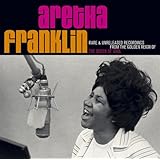
Ain't But The One (with Aretha) - this song was also released (in an altered version) on: Aretha Franklin, Rare & Unreleased Recordings From The Golden Reign Of The Queen Of Soul (Atlantic B00122MKI0):

   [Clip removed from YouTube]

*Remarks made by Joël Dufour. 

11 April 2010

Ray Charles Ft. In The Merv Griffin Show (1968, 1969, 1971, 1975, 1993)

Clipping from Jet, 14 August 1975.
Merv Griffin became a television host after filling in for Jack Parr on the Tonight Show in 1962.
The Merv Griffin Show ran from 1962 to 1986. It first aired on NBC (1962-1963, then again 1965-1968), then on CBS (1969-1972), and in syndication afterwards. Later he produced and hosted a.o. his New year's Eve Specials. Ray appeared at least five times.
Ray Charles and Quincy Jones, during a 
rehearsal,probably for the 1971 episode of the show.
  • 1968 (Season 6, episode 10, 13 September): guests were Ray Charles, actor Mickey Shaughnessy, singer-actor Rudy Vallee, entertainer Genevieve, comic Milt Kamen, columnist Doris Lilly and comedy duo Clair and McMahon with Frank Gallop. I've listened to an audio recording, probably taken from this same show (it's labeled as a "syndicated telecast", taped at the Little Theater in New York, in September 1968), where Ray performs splendid versions of You Don't Know Me and Route 66, accompanied by Freddy Robinson - g; Edgar Willis - b; Roger Humphries - dm. Another singer (possibly Merv Griffin himself) contributed a few (opening) verses to the latter song.
  • 1969 (season 6, episode 72, 26 November 1969): guests are Ray Charles, Karen Morrow, comedienne Hermione Gingold and Dr. Joyce Brothers.
  • 1971 - Jack O'Brian in The Daily Sentinel of 13 September 1971 assessed that "The Merv Griffin show saluting the brilliant Quincy Jones [with Sarah Vaughn and Ray Charles doing What'd I Say] was one of the finest shows, prime time or not, of any season."
  • 1975 (season 12, Episode 1, 1 September 1975): Aretha Franklin and Ray Charles were co-hosts with Merv of The Third Annual Ebony Magazine Music Awards. Guests included: Nancy Wilson, Stevie Wonder, B.B. King, and Quincy Jones.
  • On 31 December 1993 Ray Charles, Donna Summer, Tony Bennett, and Jack Sheldon formed the cast of the third edition of Merv Griffin's New Year's Eve Special, a live extravaganza format produced from the Resorts Casino Hotel in Atlantic City. Ray performed A Song For You, and (with The Raelettes) Smack Dab In The Middle. The Ray Charles Orchestra formed a "mass band" with Merv's house band, the Mort Lindsey Orchestra (including Byron Stripling). Donna Summer didn't want to participate in the finale, until Merv called her, "Come on out, Donna, Ray is waiting for you." The show was produced by MGE (Merv Griffin Enterprises) and syndicated nationally by Columbia Pictures Television. The line-up must have come close to this: Al Waters - tenor saxophone; Al Jackson - alto saxophone, band leader; Steve Elliot, Rudy Johnson, James Farnsworth - saxophone; David Hoffman, Larry Foyen, Kurt Weiss, Ken Scharf - trumpet; Michel Guerrier, Steve Sigmund, Marc Fields, Pete Beltran - trombone; Kenny Carr - guitar; Tom Fowler - bass; Peter Turre - drums, Ernest Vantrease - organ; The Raelettes (Angela Workman, Trudy Cohran, Michelle King, Elaine Woodard, Estella Yarbrough) - backing vocals.
A Song For You; Smack Dab In The Middle (1993):

The back catalog of Merv Griffin is now represented by Reelin' In The Years. As yet, it's unclear if any of the footage with Ray survived.

    05 April 2010

    Ray Charles On Piano & Organ On Quincy's Got A Brand New Bag (1965)

    Quincy's Got A Brand New Bag was originally issued on Mercury, SR 61063; in February 1966. The pictured CD is a recent Japanese import release. The album was recorded at Ray's RPM studios in LA, from 24 to 27 November 1965. Ray engineered. In most sources Ray is credited for playing piano/organ during the first and third sessions, but - based on Ray's own testimony - discographer Joël Dufour only attributes Ray's piano playing to Baby Cakes.
    However, Ray's distinct style of the organ playing can be easily recognized.
    1. Ain't That Peculiar (3)
    2. I Got You ( I Feel Good) (3)
    3. I Hear A Symphony (2)
    4. A Lover's Concerto (3)
    5. Baby Cakes (1)
    6. Mohair Sam (3)
    7. Something About You (3)
    8. Boss Bird (2)
    9. Hang On Sloopy (2)
    10. Fever (1)
    11. Harlem Nocturne (2)
    12. Papa's Got A Brand New Bag (3)
    Ray also contributed to the liner notes.
      Session 1:
      Bobby Bryant (tp) Urbie Green (tb) Ken Shroyer (btb) Jackie Kelso (as) Plas Johnson (ts) Jewel Grant (bars) Ray Charles, Mike Rubini (p, org) Rene Hall, Arthur Knight (g) Carol Kaye (b) Grady Tate (d) Gary Coleman (per) Quincy Jones (arr, cond).
      RPM International Studios, Los Angeles, CA, November 24, 1965.

      Session 2:
      Joe Newman (tp) Jerome Richardson (ts, fl) Bobby Scott (p, arr, cond) Ben Tucker (b) Grady Tate (d) Ray Barretto (cga, bgo).
      RPM International Studios, Los Angeles, CA, November 26, 1965.

      Session 3:
      Bobby Bryant (tp) Urbie Green (tb) Ken Shroyer (btb) Jackie Kelso (as) Plas Johnson (ts) Jewel Grant (bars) Ray Charles, Mike Rubini (p, org) Rene Hall, Arthur Knight (g) Carol Kay (b) Grady Tate (d) Gary Coleman (per).
      RPM International Studios, Los Angeles, CA, November 27, 1965.
      Album: Mercury, 1965, SR-61063. 

      04 April 2010

      Ray Charles In An American Reunion New Beginnings, Renewed Hope

      Photo clipping from Jet magazine.
      An American Reunion New Beginnings, Renewed Hope, directed by Bruce Gowers, was a co-production of the Quincy Jones Media Group and the Clinton Presidential Inaugural Committee, recorded on 17 January 1993 by HBO. It was the first presidential inaugural entertainment event.
      On camera were Ruben Blades, Tony Bennett, a saxophone group consisting of David Sanborn, Grover Washington, Jr., Curtis Stigers, Gerald Albright, Kirk Whalum, Tom Scott, Gerry Mulligan, Dave Koz, and  Michael Brecker.
      Furthermore: Luther Vandross, Ben E. King, and Melissa Etheridge (Stand By Me), Kenny Rogers, Wes Studi, Ruben Blades, Maria Conchita Alonso, James Ingram, Ashford & Simpson (The Battle Hymn Of The Republic), Bob Dylan (Chimes Of Freedom), Kathleen Battle and Kenny G. (We Shall Overcome), Aretha Franklin (Respect), Diana Ross (God Bless America), Tyne Daly (Everything's Coming Up Roses) and a big part of the We Are The World 'choir', strengthened by Aretha Franklin (who first seems to be overly happy to hand over the phone after jodeling a single line, then claims an extra round of applause for conductor Quincy Jones).
      In the credits Ray is mentioned as being part of performing We Are The World, but if he was, he must have missed his cue. He makes good on that in an excellent rendition of his late life signature song, America The Beautiful, supported by the whole We Are The World group, starring (after some repeated inviting gestures of Diana Ross) Aretha Franklin.
      Shortly after he starts, Ray can't avoid to let Quincy (and the world) know that the band is playing "too fast".

      We Are The World + at the end the first 60 - 70 seconds of America The Beautiful:


      Here's some more via C-Span:


      The event was also covered by ABC News. Source: ABC News Video Source, Tape Number: DCBH56204C.

      Ray Charles Live At Montreux Jazz Festival 1991


      (c) Keystone.

      In 1991 Ray Charles performed two or three times at the Montreux Jazz Festival - on 16 and 17 July. Footage from his performances has been produced and released in several TV and DVD formats.
      Information on Ray's performances on the 16th is here and here.

      Information on what he did on the 17th is ambiguous and confusing. This is the best I can presently make of it:

      1.
      The Concert Database of the Montreux Jazz Festival has a  description of Ray's concert on 17 July 1991, at the Casino. If it's also a full description, it was a very short (00:21:24) set.

      Personnel: Ray Charles (p, voc), Greg Phillinganges (kbds), Nathan East (b), Grady Tate (dr), Frank B. Foster III (lead,arr,comp,ts), William "Bill" Hughes (b, tb), Mel Wanzo (tb), Bob Trowers (tb), Clarence Banks (tp), Melton Mustafa (tp, flh), Derick Gardner (tp, flh), Mike Williams (tp, flh), Bob Ojeda (tp, flh), John Williams (bts, bcl), Doug Miller (ts, fl), Danny Turner (as, pic), Manny Boyd (as, fl), Kenny Hing (ts, fl), Charlton Johnson (acc, b), George Cadwell (p), David Gibson (dr), Cleve Eaton (b), Chaka Khan (voc), Rachelle Ferrell (voc), Keith Washington (voc), Tevin Campbell (voc). This article describes the band as a combination of the Trio Phillinganges and the Count Basie Orchestra.

      1. Alexander's Ragtime Band
      2. Look What They've Done To My Song, Ma
      3. One Mint Julep
      4. My Buddy
      5. Let The Good Times Roll
      6. Spirit In The Dark (probably a duet with Chaka Khan)

      #2:


      2.
      Jazz On The Screen lists a (VHS? DVD?) release titled Festival De Jazz De Montreux 1991, directed by Gavin Taylor, et al., also featuring Ray, playing Without A Song. This information is probably corrupt; should it be Look What They've Done To My Song, Ma?)

      3. 
      According to this source there was a 125-minute video taping of or program around the festival's Gala Night, with Quincy Jones, George Benson, Toots Thielemans, Clark Terry, Henry Salvador, George Duke, Grady Tate, Al Jareau, Jon Hendricks, Chaka Khan, and Ray. I don't know if this gala was on the 16th or the 17th. If Ray performed during the gala, he in fact appeared three times on stage.

      This 132-minute contains all of the above. At 1:10 Ray comes on stage (at 1:10) to perform the Look What They've Done...-version that I have described below, sub 7 and 8:
         [Clip was removed from YouTube]

      4.
      I also found a TV production, entitled The 25th Montreux Music Festival, distributed by Disney Channel Productions Cable Network, a "special featuring performance highlights from the 1991 Montreux Music Festival", hosted by Al Jarreau, with Ray Charles in the line-up. This program may have entailed footage from any of Ray's performances on the 16th and/or 17th.

      5. 
      The Montreux festival editions of 1991, 1992 and 1993 were co-produced by Claude Nobs and Quincy Jones. Sony recorded the entire festivals in 1991 and 1992 in High-Definition Television. The DVD (full title: Quincy Jones & Claude Nobs Present: Montreux Jazz Festival 1991 & 1992; for sale here;  see cover above) offers a fine selection. Georgia On My Mind and My Buddy were released on Quincy Jones' 4-CD box Q, A Musical Biography (Rhino/WEA, 16 October 2001, ASIN: B00005Q3AD).

      6.
      On 1 July 1995 Canal+ aired Best Of Montreux, with a selection from shows given between 1988 and 1993 by Booker T, Sam Moore, Elvis Costello, The Wailers, Kool & the Gang, Ray Charles, Was Not Was, Annie Lennox, Take 6, George Duke, Al Jarreau, and Fats Domino: "De l'inusable Ray Charles à la magnifique Annie Lennox (ex-Eurythmics), les géants d'hier et d'aujourd'hui nous offrent de belles prestations live. A visionner, pour une fois, en différé." Source here. This program may have contained footage from any of Ray's performances on the 16th and/or 17th. Who knows more?

      7.
      This footage comes from any of the formats listed above.
      Look What They've Done To My Song, Ma (Montreux, 17 July 1991); Quincy Jones conducts the band:
         [Clip was removed from YouTube]

      8.
      Look What They've Done... was also the opener of a 1991 festival selection titled The Montreux Years - 1991. The program looked as if it was legit, with credits and all, but it probably wasn't.

      9.
      For the set with George Benson and Chaka Khan on the 16th, read this article.

      03 April 2010

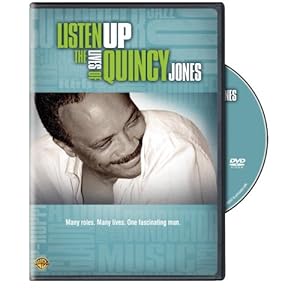
      Ray Charles In Listen Up: The Lives Of Quincy Jones (1990)

      Promotional CD, liner notes.

      Vinyl release.
      The exact release history is totally unclear to me, but this maxi single was part of a multimedia package with the documentary and "book with music" Listen Up - The Lives Of Quincy Jones, "a Warner Bros. motion picture", available with cassette or CD. It obviously was also released on vinyl. The maxi single contains 7 remixes of Quincy's composition Listen Up.

      Produced and Arranged by: Arthur Baker and Arif Mardin. Executive Producer: Courtney Sale Ross. Published by: Shakin' Baker Music/Deniz Music BMI/Black Chick. Recording and Original Mix Engineer: Louis Scalise. Keyboards Programming: Eric Kupper and Mac Quayle. Features: Tevin Campbell, Siedah Garrett, Karyn White, Ice T, Al B. Sure!, The Winans, James Ingram, El DeBarge, Big Daddy Kane, Melle Mel, Ray Charles.

      ?Vinyl? single: Warner Bros/Quest Records, 7 September 1990, ASIN B00000DDR5.
      CD single: Warner Bros, 14 September 1990, ASIN: B000008HS0.
      Warner Home Video VHS: Warner Bros, 28 October 1992, ASIN: 6302066905.

      Raw Dance Mix:


      The surprising - impressionistic - documentary was written and directed by Ellen Weisbrod. The video and sound editing turned it into a masterpiece. The film was produced in 1990 and released on August 2nd, 1991. In a splendid découpage of music and interview fragments it presented a kaleidoscopic story of Q's life and career, and a who-is-who of all the stars that populate(d) Q's universe.


      The excellent documentary Listen Up: The Lives Of Quincy Jones is also known as Back On The Block With Quincy Jones and Places You Find Love. It offers a kaleidoscopic, associative picture and a marvelously mixed soundscore of Jones' life, with on camera interview soudbites, musical themes and archive footage.

      On camera: interviews/performance footage/film clips: Quincy Jones, George Benson, Ray Charles, Miles Davis, Billy Eckstine, Ella Fitzgerald, Dizzy Gillespie, Lionel Hampton, Herbie Hancock, Michel Legrand, Harry Lokofsky, Bobby McFerrin, Chan Parker, Frank Sinatra, Clark Terry, Sarah Vaughan. Ray contributes with:
      • I'll Be Good To You (with Quincy Jones and Chaka Khan)
      • Let The Good Times Roll
      • In The Heat Of The Night
      • Listen Up (with Tevin Campbell, Siedah Garrett, Karyn White, Al B. Sure!, The Winans, James Ingram, El DeBarge, Big Daddy Kane, Ice-T, Melle Mel). For the maxi single release of these songs also read this. 
      From Amazon:
      "If casual music fans know the name of the man who is the subject of Listen Up: The Lives of Quincy Jones, more than likely it's as the producer of Off the Wall and Thriller, the two albums that launched Michael Jackson into the pop stratosphere, or perhaps as the musical mastermind behind We Are the World. Yet while those may be Jones's biggest successes, they certainly aren't the only ones; indeed, some might argue that they are not even the most representative entries on the resumé of the composer-arranger-producer who has made a career of defying all attempts to categorize and define him. A partial list of the folks who appear in director Ellen Weissbrod's 1990 documentary provides some idea of Jones's stature: Ella Fitzgerald, Ray Charles, Dizzy Gillespie, Miles Davis, Frank Sinatra, Steven Spielberg, Oprah Winfrey, and Barbra Streisand, to name just the biggest of the big. Some of them were involved in the making of Back on the Block, the album Jones was working on at the time and a kind of career summation that included elements of jazz, pop, hip-hop, R&B, and other styles. That recording provides the overall context here, but there's a great deal more, as Jones leads us through his hardscrabble Chicago childhood (his mother had gone to a mental hospital when he was 6 or 7; as a result, "the word 'mother' doesn't have much meaning for me"), the family's move to Seattle, his days as a trumpeter with Lionel Hampton and later as leader of his own big band, his move into production (among his earliest successes, amazingly, was Lesley Gore's It's My Party) and film composing (In the Heat of the Night, The Color Purple, Roots, and many more), his three failed marriages, the effects of race on his life and work, and serious health issues such as the near-fatal cerebral aneurysm he suffered in 1974. Weissbrod takes a creative approach to all of this, eschewing voice-over narration in favor of a more freeform collection of spoken words and images, often commingling and overlapping older footage with moodily lit current interview segments and scenes of "Q" at work in the studio."
      Director: Ellen Weissbrod.
      VHS: Warner Home Video, 1990, ASIN: B002I2UIYG.
      DVD: Warner Bros, 27 January 2009, ASIN: B001JNNE6O.


      Trailer (quite a good one, with 2 fragments featuring Ray) here:

      Another trailer-like edit (don't miss RC & Q sharing a good laugh!):
      The complete film: