Mediagraphy - Discography - Trackography - Videography - Gigography - Biography - Chronology

07 February 2010

I'm All Yours Baby (1969)

  1. Yours
  2. I Didn't Know What Time It Was
  3. Love Is Here To Stay
  4. Memories Of You
  5. Till The End Of Time
  6. I Had The Craziest Dream
  7. Someday
  8. Indian Love Call
  9. I Dream Of You (More Than You Dream I Do)
  10. Gloomy Sunday
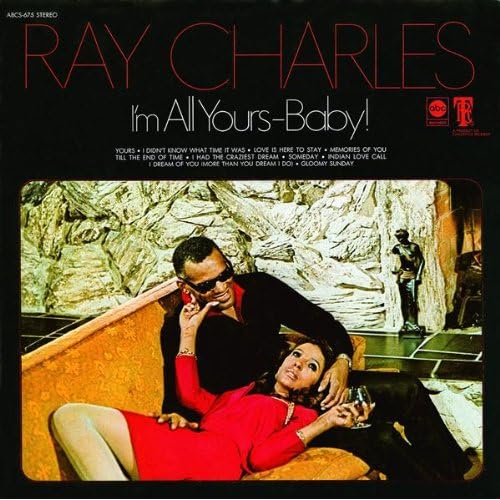
    The corny LP cover and the liner notes promised romance. Ray and Sid Feller used old ballads and lots of strings for the album's seduction sequences.
    Recorded at RPM. ABC/Tangerine 675, February 1969.

    Gloomy Sunday (#10) was recorded in February 1968, possibly with Carol Kaye on bass.

    Gossip king Bill Lane wrote in the Sacramento Observer (May 1, 1969): "A lot of the Soul Sisters are a little angered over the picture on the cover of Ray Charles' latest album, I'm All Yours Baby. Some of them are saying, 'Why didn't they use a black woman... up all sexy with him like that!' Ironically, in a soul session one night I heard it run down like this: 'Yeah - she shoulda been more his color'. Another chick: 'Honey, I know that woman. She's one of us!' Another: 'Even if she is, she shoulda been blacker'. Still another: 'Who cares! To Ray all of 'em are the same anyway!' How can a black man win?"


    05 February 2010

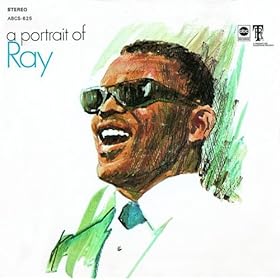
    A Portrait Of Ray (1968)

    1. Never Say Naw
    2. The Sun Died
    3. Am I Blue
    4. Yesterdays
    5. When I Stop Dreamin'
    6. I Won't Leave
    7. A Sweet Young Thing Like You
    8. The Bright Lights And You Girl
    9. Understanding
    10. Eleanor Rigby
    Lots of ballads on this album, some in falsetto.

    Recorded at RPM International in Los Angeles.

    With The Ray Charles Orchestra, studio musicians, a string section and The Raelettes (Gwen Berry, Alex Brown, Merry Clayton, Clydie King).

    Understanding (#9) was recorded on April 11, 1967 (see this for personnel); Never Say Naw (#1), The Sun Died (#2) Am I Blue (#3), Yesterdays (#4), When I Stop Dreamin' (#5) and Eleanor Rigby (#10) - all arranged by Sid Feller - were recorded in February 1968. Carol Kaye played bass on #9 and #10 (and possibly also on #3, #4). The Raelettes backed Ray on #10. The arrangements on these tunes were penned by Sid Feller.
    Oliver Nelson and Rene Hall also contributed charts to the album.

    ABC/Tangerine 625, March 1968.

    Album (pickup clip):

    In The Heat Of The Night (1967)


    This title song was composed and produced by Quincy Jones for the 1967 film. Director Norman Jewison recalled songwriters Alan and Marilyn Bergman singing their bluesy tune for Ray Charles. After they finished, Charles said to Quincy Jones, "They're brother and sister, right?" Jones replied, "No, no, they're married, they're white," To which Charles countered "No, they ain't." Jewison: "It was probably the greatest compliment he could have paid them." Source here. 

    The single version (3'20) represents the complete taping. For the film a 2'35 cut-out was used, without the tenor sax-intro. The recording took place at Ray's RPM International studio in Los Angeles, probably in May or June 1967. Quincy Jones won a Grammy Award (for Best Score Soundtrack Album for a Motion Picture, Television or Other Visual Media) for the album.
    Carol Kaye remembers Toots Thielemans (on harmonica, in Mama Caleb's Blues? BS) as one of the session musicians, and herself playing electric bass. In an interview she elaborated, "What a great, great project. I worked with Quincy Jones on the film music, playing fuzz bass on a lot of the cues. That was pretty cool. Not many people knew you put fuzz on a bass; they thought it only worked with a guitar. Playing the title song with Ray Charles was a dream come true. Ray was so easy to work for. I thought he was a real salt-of-the-earth kind of man. We traded a lot of jokes back and forth. He was a good kidder. We cut the track at Ray's studio. I asked to have his vocal way up in my headphones because that's what I wanted to play to. On some records, you want to cook with the band. With Ray Charles, you wanted to cook with his singing. His vocal was the most important thing, so that's what you had to support." Listen to some memories of Quincy here.

    The not overly clear liner notes suggest that In The Heat Of The Night was taped with Roland Kirk on flute, and Don Elliot on drums, but I'm only sure about Carol Kaye's base (uncredited) and the terrific organ playing by Billy Preston.

    Ray also played solo piano on Mama Caleba's Blues (B7 of the soundtrack). The microphone was placed behind the piano, to create a somewhat 'surreal' echo effect. With Ray Brown (or was it Carol Kaye again? BS) on base, ?Don Elliot? on drums, Billy Preston on organ and an unidentified musician (Toots Thielemans?) on harmonica.

    Single (A): ABC/Tangerine 10970, 1967-08. B/w Something's Got To Change.
    Soundtrack album: United Artists Records, 1C 064-82 893.

    Clip with film's credits:


    04 February 2010

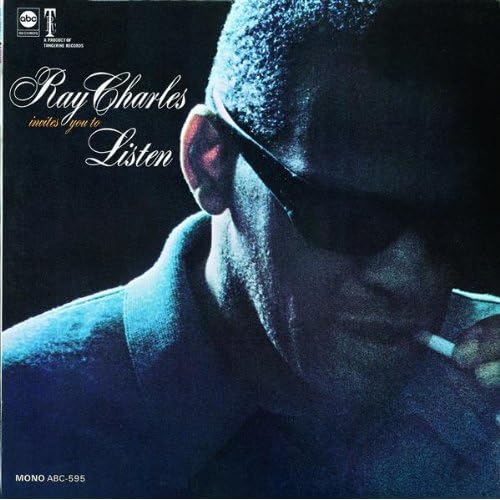
    Ray Charles Invites You To Listen (1967)

    1. She's Funny That Way (I Got A Woman Crazy For Me)
    2. How Deep Is The Ocean (How High Is The Sky)
    3. You Made Me Love You (I Didn't Want To Do It)
    4. Yesterday
    5. I'll Be Seeing You
    6. Here We Go Again (ft. Alex Brown)
    7. All For You
    8. Love Walked In
    9. Gee, Baby Ain't I Good To You
    10. People
    As an experiment, Ray sings a number of tunes with a high sustained falsetto.

    Recorded in 1966 and 1967 (January: #6, #9) at RPM International in Los Angeles.
    With members of The Ray Charles Orchestra and session musicians (individuals uncredited, but in #6 with Billy Preston on organ; in #6 and #9 with Rene Hall on guitar, Carol Kaye on bass, Earl Palmer on drums), and The Raelettes (Gwen Berry, Merry Clayton, Clydie King, and Alex Brown). Arrangements by Sid Feller.

    ABC/Tangerine 595, June 1967.

    Complete album:


    03 February 2010

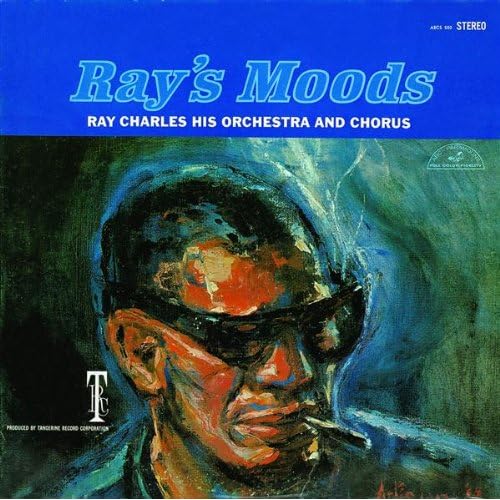
    Ray's Moods (1966)

    During his rehab-year off - without any live gigs to speak of - in 1965, Ray spend a lot of time in his studio. These sessions resulted in an avalanche of singles and three albums, each - seemingly - with a random distribution of songs*: Country & Western Meets Rhythm Blues a.k.a. Together Again (1965), Crying Time (Jan. 1966) and Ray’s Moods (Sep. 1966).
    *As observed by Joël Dufour.

    1. What-Cha Doing In There (I Wanna Know)
    2. Please Say You're Fooling
    3. By The Light Of The Silvery Moon
    4. You Don't Understand
    5. Maybe It's Because Of Love
    6. Chitlins With Candied Yams 
    7. Granny Wasn't Grinning That Day
    8. She's Lonesome Again
    9. Sentimental Journey
    10. A Born Loser
    11. It's A Man's World
    12. A Girl I Used To Know
    It's a richly varied album, with some ballads, some country, some Raelettes-powered R&B, and an instrumental penned by Ray. Recorded at RPM International in Los Angeles, with members of The Ray Charles Orchestra, session musicians and The Raelettes. 
    Song #3 was recorded at United Studios in Hollywood in June 1965, the other tracks at RPM International in Los Angeles (in the first fall session of 1965: #5 and 7; in April 1966: #9; in June 1966: #4 and 10; in August 1966: #2, 6, 8, 11, 12; between August and September: #1). All these tunes probably had Rene Hall on guitar, and Earl Palmer on drums (except for #12, where Hal Blaine played drums). From June 1966 on the sessions had Carol Kaye on electric bass. The instrumental Chitlins With Candied Yams (#6) has a great organ piece by Billy Preston* (he's also on #12, but Ray played the organ on #4).


    Sentimental Journey (#9) was recorded in April 1966. With all or most of the following musicians: Preston Love on alto, Leroy Cooper on bari, Rene Hall on guitar, Carol Kaye on bass, Earl Palmer on drums, and The Raelettes (Merry Clayton, Gwen Berry, Clydie King, Lilian Fort or possibly Edna Wright).
    A Born Loser (#10) was recorded in June 1966. With uncredited horns, Rene Hall on guitar, Carol Kaye on bass, Earl Palmer on drums, and The Raelettes (as above).

    ABC/Paramount/Tangerine 550, [September] 1966**.

    * Sounding a lot like Ray, though! ** The official Ray Charles website dates the release in July '66, but this can't be correct. Even more confusingly, Billboard on April 2, 1966 mentions a #13 position (from #13 the week before, after a 4-week run), then lets the album disappear for a few months, to let it return on October 1, 1966 as a newcomer and a fast mover on #25 (peaking on #7 on November 19, 1966). All about that April chart is corrupt; the October score is entirely credible. Conclusion: the album came out in late September.


    02 February 2010

    Crying Time (1966)

    Cover illustration by 
    William "Snooky" Alexander.
      During his rehab-year off - without any live gigs to speak of - in 1965, Ray spend a lot of time in his studio. These sessions resulted in an avalanche of singles and three albums, each - seemingly - with a random distribution of songs*: Country & Western Meets Rhythm Blues a.k.a. Together Again (1965), Crying Time (Jan. 1966) and Ray’s Moods (Jul. 1966). To my taste, Crying Time entailed the best selection of songs.

      *As observed by Joël Dufour.

      1. Crying Time
      2. No Use Crying
      3. Let's Go Get Stoned
      4. Going Down Slow
      5. Peace Of Mind
      6. Tears
      7. Drifting Blues
      8. We Don't See Eye To Eye
      9. You're In For A Big Surprise
      10. You're Just About To Lose Your Clown
      11. Don't You Think I Ought To Know
      12. You've Got A Problem
      In No Use Crying and Going Down Slow he showed the bottom of his soul. With Let's Go Get Stoned he seemed to make clear that he didn't have too much regret about his former drugs habit. The song Crying Time hit the Top Ten on all the charts and won two 1966 Grammy Awards for Best Rhythm & Blues Recording and Best Rhythm & Blues Solo Vocal Performance.

      #11 was recorded in February 1965 at United Studios in Hollywood; #01, 09 at the same venue in June 1965; #05 at RPM in Los Angeles in the fall of 1965; #02, 03, 04, 10 at RPM in a second fall session. On all these tracks Rene Hall was on guitar, and Earl Palmer on drums. Don Peake remembers playing guitar on #1 and #2 (was he overdubbed?). On Drifting Blues (#7) Ray Crawford was on guitar, Jim Crutcher on bass; and Chiz Harris on drums.
      Billy Preston's distinct organ playing is the major factor in the great sound of the bluest tracks on the album.
      Also with uncredited strings and choir, and with The Raelettes* on some tracks.

      ABC/Paramount 544, January 1966.

      * Bobby Hutcherson remembered that his sister Peggy was one of the singers backing Ray on Let's Go Get Stoned (and even that she was a Raelette at that time).


      Country And Western Meets Rhythm And Blues (aka Together Again) (1965)

      During his rehab-year off - without any live gigs to speak of - in 1965, Ray spend a lot of time in his studio. These sessions resulted in an avalanche of singles and three albums, each - seemingly - with a random distribution of songs*: Country & Western Meets Rhythm Blues a.k.a. Together Again (1965), Crying Time (Jan. 1966) and Ray’s Moods (Jul. 1966), and a slew of songs that only were issued as singles.

      *As observed by Joël Dufour.

      1. Together Again
      2. I Like To Hear It Sometime
      3. I've Got A Tiger By The Tail (Swingova)
      4. Please Forgive And Forget
      5. I Don't Care
      6. Next Door To The Blues
      7. Blue Moon Of Kentucky (Swingova)
      8. Light Out Of Darkness
      9. Maybe It's Nothing At All
      10. All Night Long
      11. Don't Let Her Know
      12. Watch It Baby
      This was the first album to come out with a number of tunes recorded at RPM, Ray's own studio at West Washington Boulevard in Los Angeles. The 4-track console was built by Tom Dowd.
      Tunes #1, #4 and #8 were recorded at the United Studios in Hollywood in January 1965. Song #10 was recorded in February 1965 at the same studio. These four tracks had Rene Hall on guitar, and Earl Palmer on drums.
      Tracks #4 and #8 were originally written for Ballad In Blue. I don't know if the different, string-less versions used in the film were also recorded at United.
      The Jack Halloran Singers and The Raelettes took care of the backing vocals.

      Tracks #3 and #7 were done in Ray's Swingova rhythm. The term had been invented by arranger Sid Feller when Ray resurrected R&B bandleader Buddy Johnson's 1943 hit Baby, Don't You Cry, to emphasize its hybrid swing/bossa nova style (at that time the bossa nova was 'sweeping the nation')*.

      Arrangers: Sid Feller (#1, 3, 4, 5, 7, 8,10, 11), Onzy Matthews (# 2, 6, 9), and Gerald Wilson (#12).

      The album had the first in a series of tasteless album cover designs, a new responsibility of Ray's second man at Ray Charles Enterprises, Joe Adams.

      * A fourth Swingova arrangement was Love's Gonna Live Here.

      ABC/Paramount 520, August 1965.


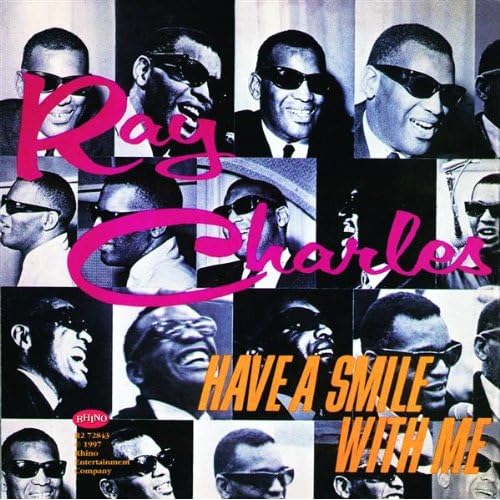
      Have A Smile With Me (1964)

      1. Smack Dab In The Middle
      2. Feudin' And Fightin'
      3. Two Ton Tessie
      4. I Never See Maggie Alone
      5. Move It On Over
      6. Ma (She's Making Eyes At Me)
      7. The Thing
      8. The Man With The Weird Beard
      9. The Naughty Lady Of Shady Lane
      10. Who Cares (For Me)
      The UK (EMI) release specified the personnel.
      A concept album of saucy and silly comedy songs, and with that the counterpart of the preceding album Sweet & Sour Tears.

      Personnel:
      Curt Miller, Oliver Beener, Floyd Jones, Philip Guilbeau, John Hunt, Roy Burrowes, Wallace Davenport - trumpets; Henderson Chambers, Julian Priester, Keg Johnson - trombones; Danny Turner, Harold Geezil Minerve, Bill Pearson, Hank Crawford - alto saxophones; David Fathead Newman, James Clay - tenor saxophones; Leroy Cooper - baritone saxophone;  Sonny Forriest, Al Hendrickson - guitar; Wilbert  Hogan, Irving Cottler, Bob Thompson (drums). Background vocals: The Jack Halloran Singers, The Raelettes. Unknown contributor roles: Frank Gauna; James Austin.
      Arrangers: Gerald Wilson (#5, 10), Johnny Parker (#3, 4, 7,8, 9), Benny Carter (#1, 2, 6). Produced by Sid Feller.


      Some sources say that #5 and #10 were recorded between gigs in Los Angeles, in the first Days of May '64, but Move It On Over and Who Cares (For Me) were recorded in 1962 at the Capitol Studios in New York City for, but left off, Modern Sounds I in 1962. Ray pulled them out for Have A Smile With Me two years later (instead of using the original Capitol stereo mix, to get more billing, Bell Sound remixed it, badly; cf. 1, 2).
      Steve Hoffman remarked, "Irony is in the fact that the great songs like Smack Dab In The Middle, which were done at Bell originally were ALSO given a bad sounding remix and the original mixes discarded. So, at one time both sets of mixes remained for the [Have A] Smile With Me album, eventually only the mono original mixes were left, sad to say."

      The other 'comedy' tracks were recorded in New York on May 7th, 1964.

      ABC/Paramount 495, June 1964.


      01 February 2010

      Sweet And Sour Tears (1964)

      1. Cry
      2. Guess I'll Hang My Tears Out To Dry
      3. A Tear Fell
      4. No One To Cry To
      5. You've Got Me Crying Again
      6. After My Laughter Came Tears
      7. Teardrops From My Eyes
      8. Don't Cry Baby
      9. Cry Me A River
      10. Baby, Don't You Cry (The New Swingova Rhythm)
      11. Willow Weep For Me
      12. I Cried For You
      Five tunes were selected for
      jukebox distribution. Coll. André Monot.
      In 1964 Ray Charles decided to record this concept album in which he interpreted material dealing with loss and heartbreak.

      Personnel:
      Musicians [partially corrupt listing, BS]: Curt Miller, Oliver Beener, Floyd Jones, Burgess Gardner, Philip Guilbeau, Joshua Willis, Joe Bridgewater, John Hunt - trumpets; Henderson Chambers, Julian Priester, Keg Johnson - trombones; Danny Turner, Harold Minerve - alto saxophones; David Fathead Newman, Don Wilkerson, James Clay - tenor saxophones; Leroy Cooper, Cecil Payne - baritone saxophones; Sonny Forriest - guitar; Panama Francis, Wilbert Hogan, Bob Thompson - drums. Background vocals: The Gene Lowell Singers, The Raelettes. Arranged by Sid Feller and Calvin Jackson. Sid Feller, Joe Adams - producers.

      Tracks # 7 -12 recorded on 8 May 1964 at the United Studios in Hollywood and arranged by Calvin Jackson. Tracks #1 - 6 recorded at the Bell Sound Studios in New York and arranged by Sid Feller, around the same date.

      ABC/Paramount 480, August 1964.


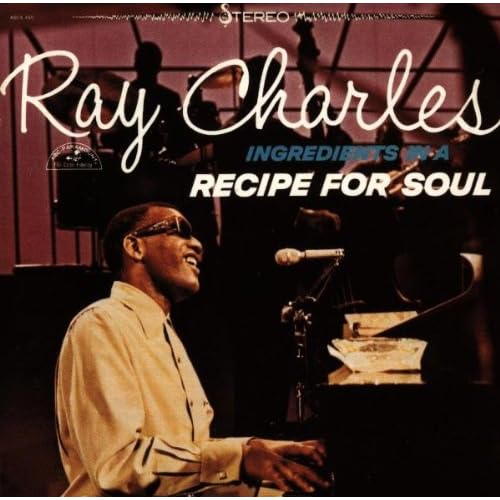
      Ingredients In A Recipe For Soul (1963)

      1. Busted
      2. Where Can I Go
      3. Born To Be Blue
      4. That Lucky Old Sun
      5. Ol' Man River
      6. In The Evening (When The Sun Goes Down)
      7. A Stranger In Town
      8. Ol' Man Time
      9. Over The Rainbow
      10. You'll Never Walk Alone
      It was back to R&B for this album. Producer Sid Feller and Ray laid the songs out in a dramatic sequence, with Ray playing a character going through a sequence of emotions in each song. He starts flat broke in a song he borrowed from Johnny Cash, Busted.

      Personnel in New York:
      Hank Crawford, Bill Pearson, Harold Minerve, Dan Turner - alto saxophone; James Clay, David Fathead Newman - tenor saxophone; Leroy Cooper - baritone saxophone; Oliver Beener, Wallace Davenport, Phil Guilbeau, John Hunt, Roy Burrows, Floyd Jones, Curtis Miller - trumpet; Henderson Chambers, Jim Herbert, Keg Johnson, Julian Priester, Fred Morden - trombone; Sonny Forest - guitar; Edgar Willis - bass; Wilber Hogan, Bob Thompson - drums; The Raelettes with Margie Hendricks - backing vocals. Arrangers: Marty Paich (#4, 5, 9), Benny Carter (#1, 6, 8), Sid Feller (#3, 7, 10) and Johnny Parker (#2).

      During the session in Los Angeles Ray also recorded Without A Song. The personnel there was: Irving Carter - drums; Al Hendrickson - guitar; Joe Comfort - bass; Armand Kaproff, Eleanor Slatkin, Harold Schneier, Jesse Ehrlich - cello; Stella Castellucci - harp; Allan Haishman, Alvin Dinkin, Cecil Figilski, Joe DeFiore, Louis Kevman, Virginia Majeivski - viola; Arnold Belnick, Erno Neufield, Gerald Barrett, Herman Clebanoff, James Getzoff, Joe Stepansky, Leonard Malarsky, Marion Limonik, Marshall Sosson, Paul Shure, Robert Barene, Vicot Arno - violin; The Jack Halloran Singers - backing vocals.

      Recorded on 10 (Los Angeles) and 13 (New York) July 1963.

      ABC/Paramount 465, August 1963.